BUGAS, BADIAN, CEBU, October 9, 2026
Six months after the baseline count, the mangrove nursery of the Bugas Farmers, Fishermen, and Livestock Owners Organization (BUFFALOO) is showing both promise and a problem: the seedlings that survived are growing well, but fewer than half of the monitored seedlings are still alive.
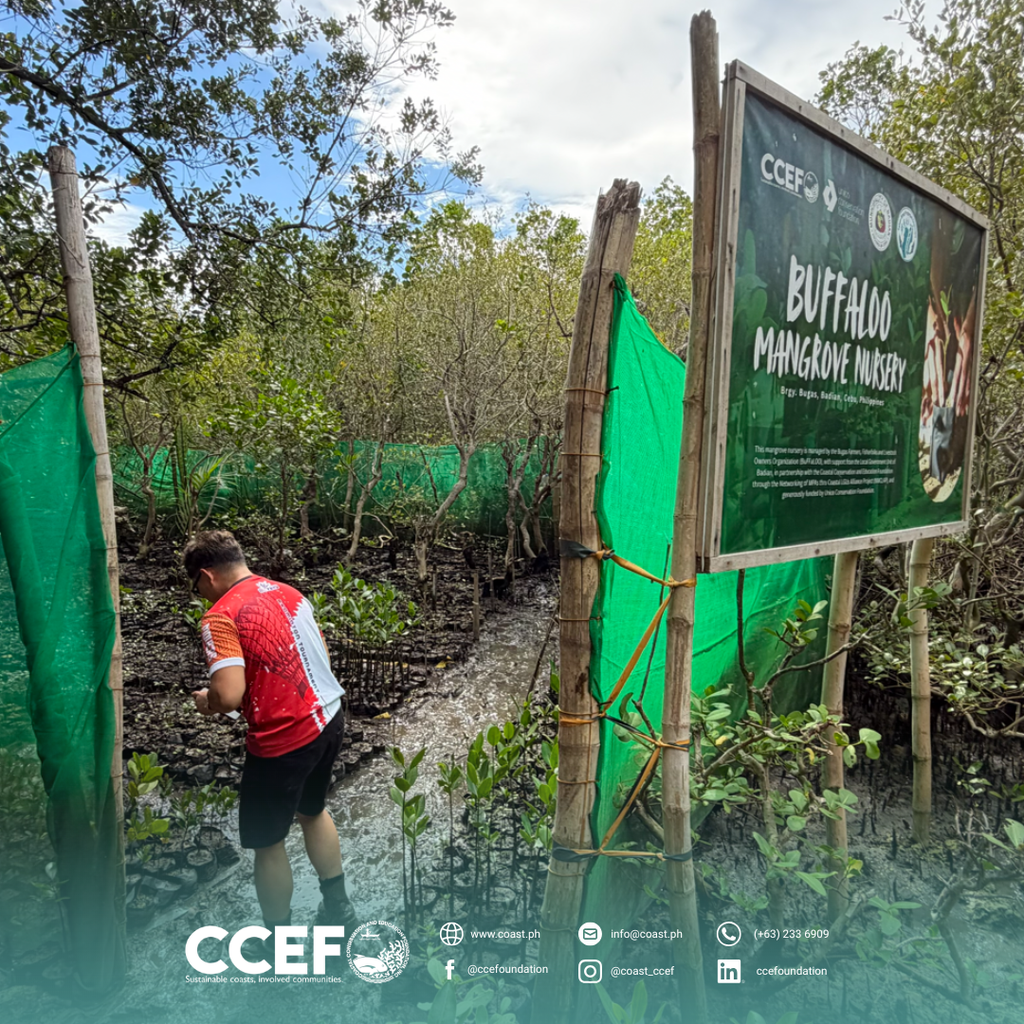
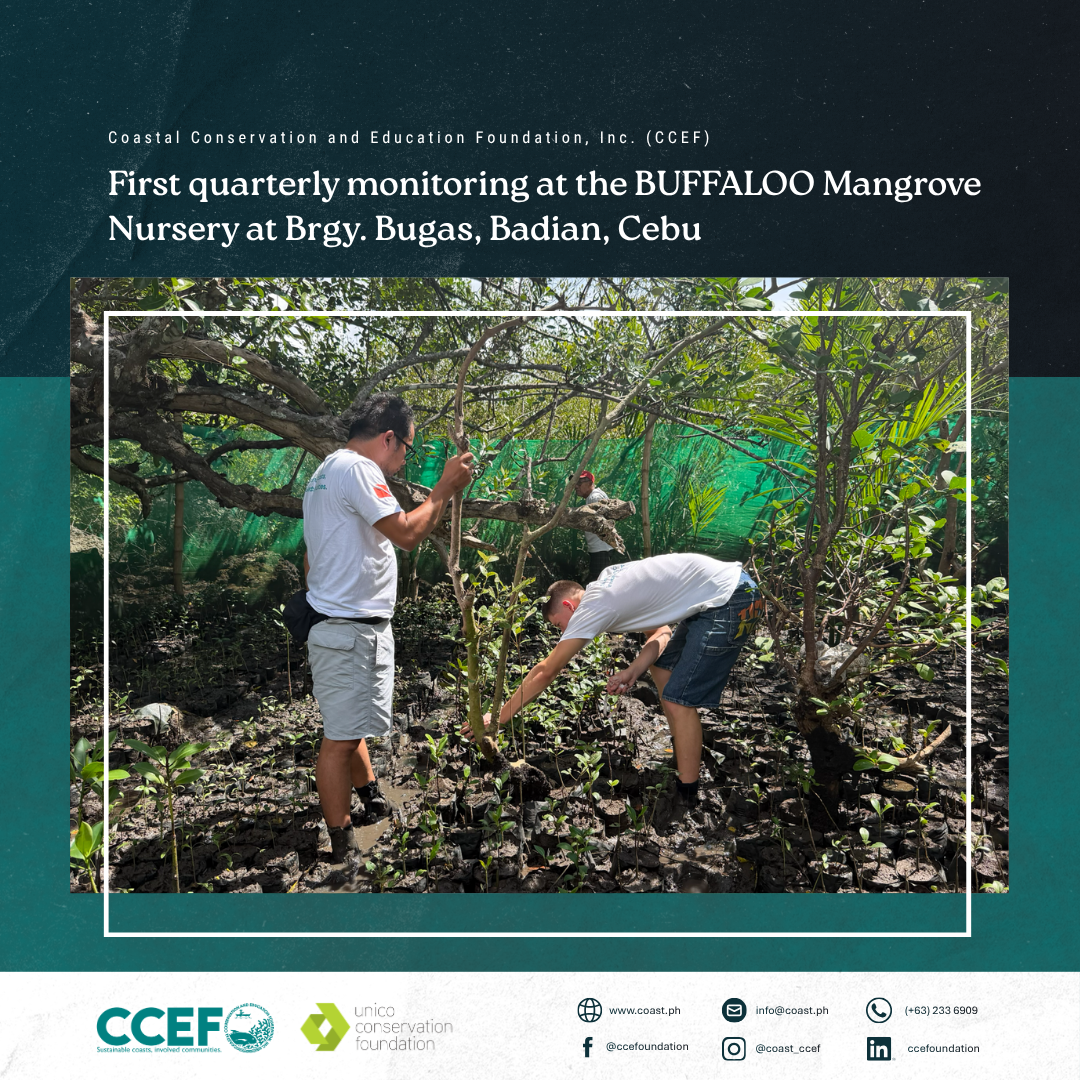
The Coastal Conservation and Education Foundation (CCEF) conducted a site inspection and the first quarterly monitoring of the nursery in Barangay Bugas. The nursery was established on February 12, 2026, and supports community-based mangrove management in Southeast Cebu area by providing healthy seedlings for future rehabilitation work.
What the numbers show
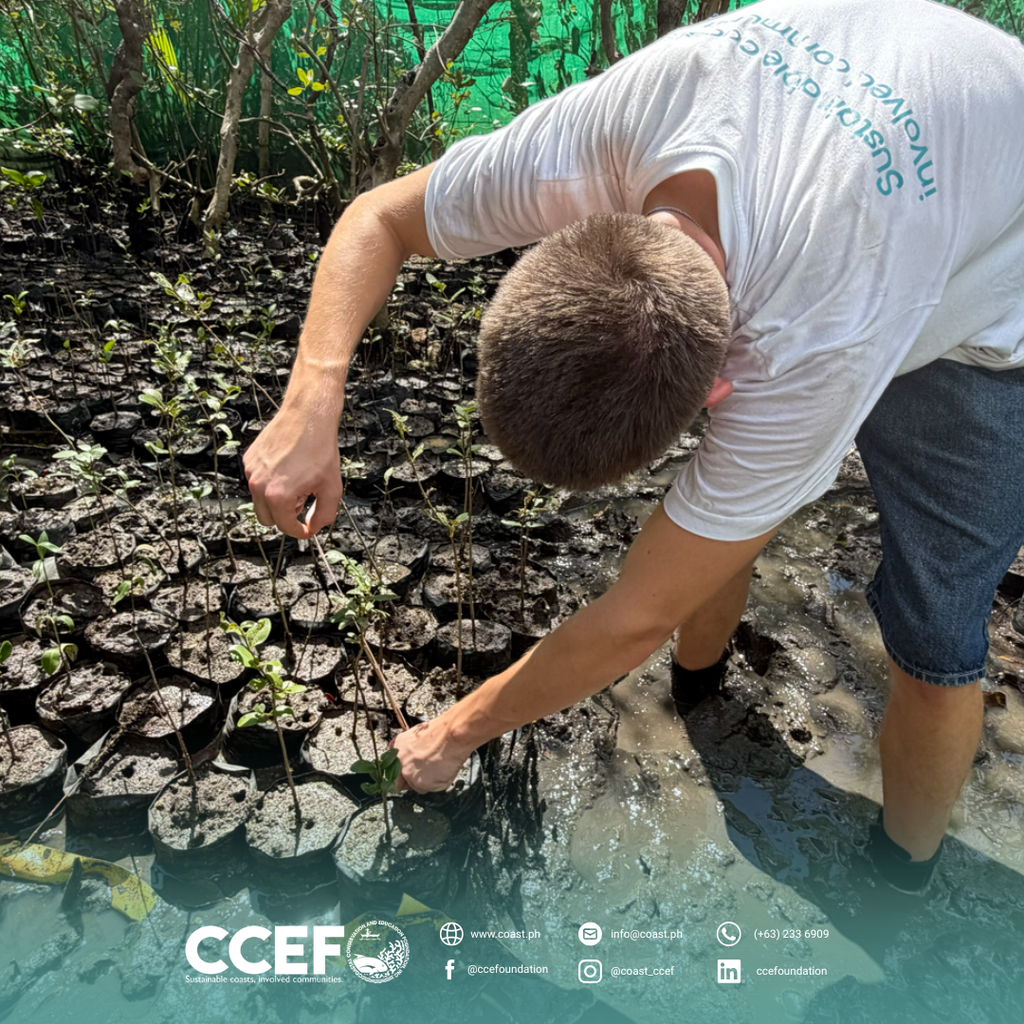
A total of 2,730 seedlings were bagged: 2,020 Avicennia marina, 180 Aegiceras sp., 200 Ceriops sp., and 330 Rhizophora spp. Ten percent of these (273 seedlings) were set aside for monitoring. Since the baseline on April 30, 2026, 129 of the 273 seedlings remain, a survival rate of 47.25%, with 144 mortalities. The survivors, however, are thriving. Average height rose from 22.09 cm to 30.52 cm, a growth rate of 38.16%, and the average number of leaves increased from 5 to 8.
Species tell different stories
Ceriops zippeliana had the highest survival rate at 90.00%, followed by Aegiceras floridum at 88.89% and Rhizophora spp. at 72.73%. Avicennia marina had the lowest at 35.15%, accounting for 131 of the 144 mortalities. Rhizophora spp. also posted the strongest growth at 49.45%, with average height increasing from 38.06 cm to 56.88 cm.
The fiddler crab factor
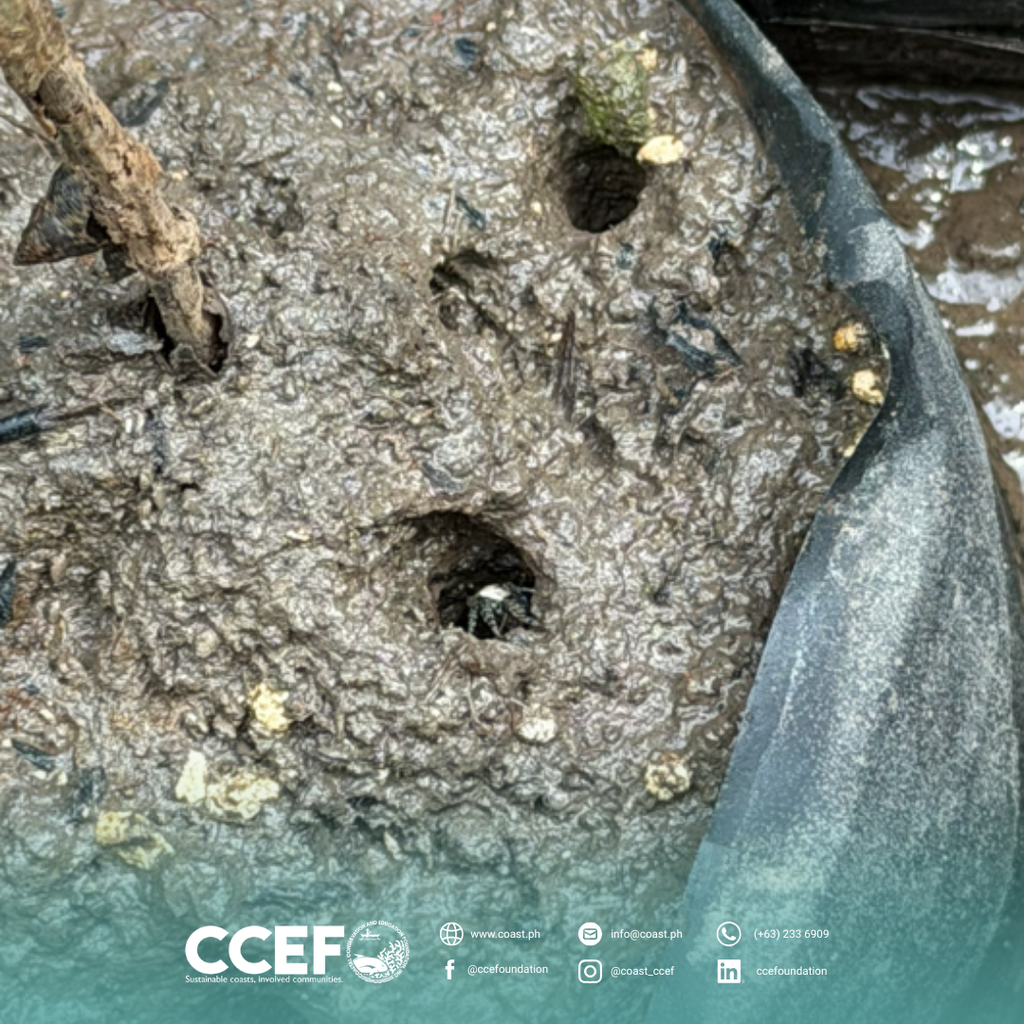
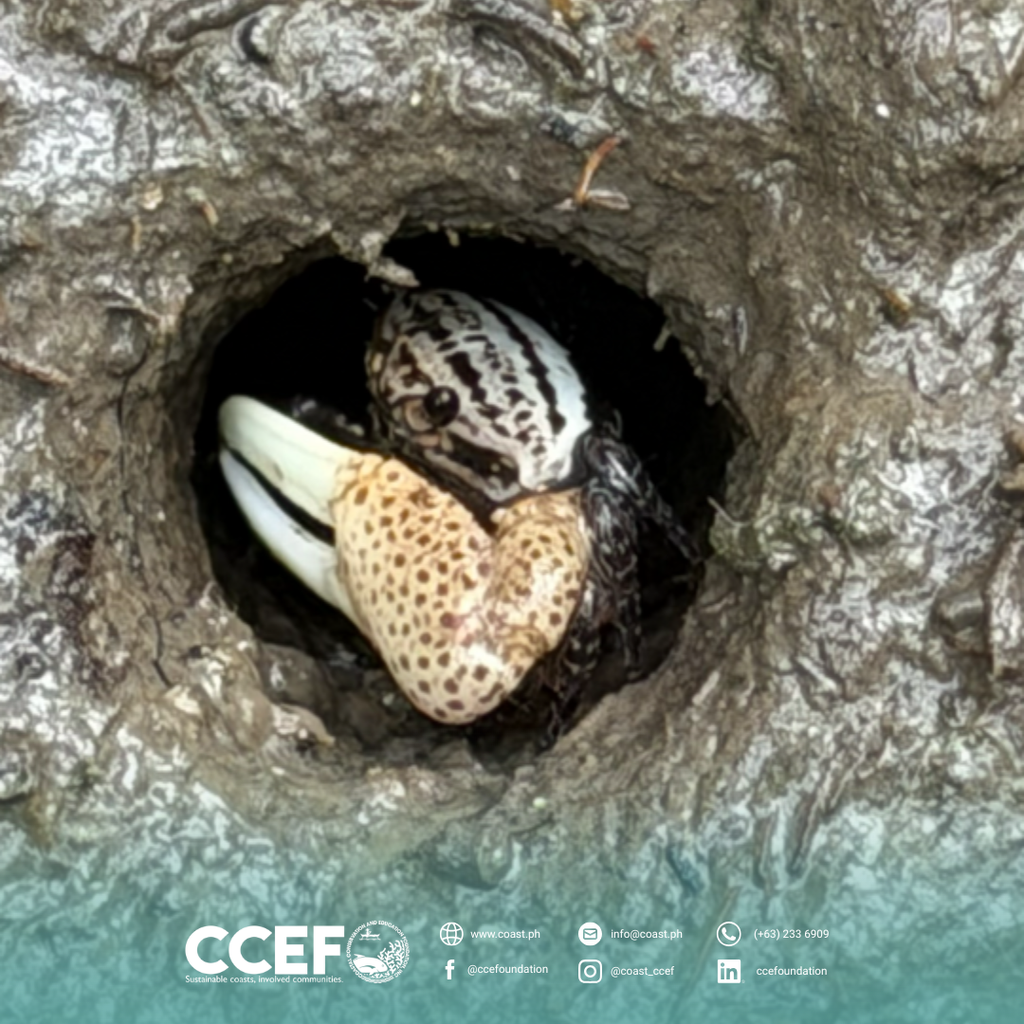
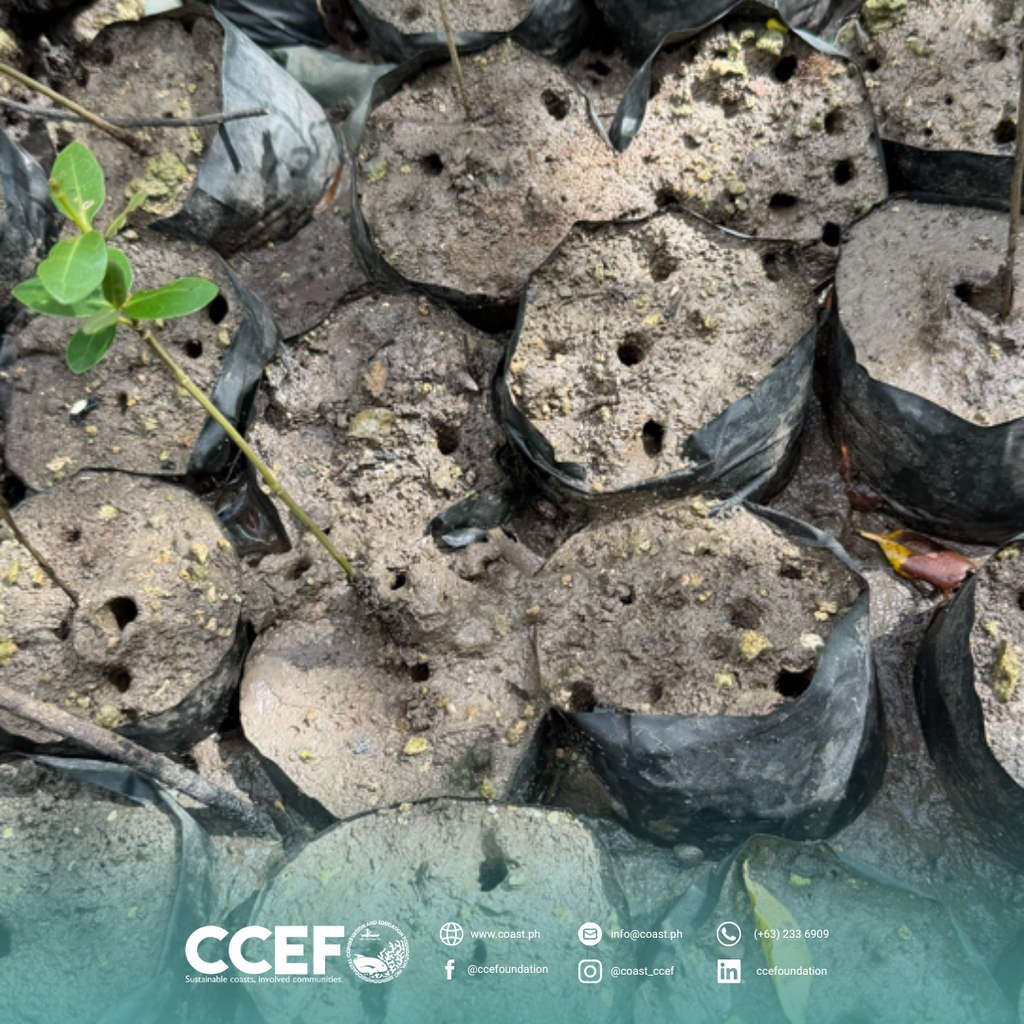
The team observed multiple dead seedlings with holes in their polybags and fiddler crabs, including the Triangular Fiddler Crab (Austruca triangularis), nearby. Seedlings near the landward edge and fence had fewer crab holes than those in the middle and seaward portions of the nursery, where ground elevation may be lower. The team believes the crabs may have damaged the roots directly, or that their burrows exposed sensitive roots to air.
Recommendations
To reduce losses, the team recommends elevating the bagged seedlings by about 5 inches. The team also noted Diospyros ferrea (locally known as bantolinao) growing along the pathway to the nursery, observed by CCEF’s Jofel Coching. A seed propagation project for the species could supply material for bonsai production, a possible alternative livelihood for BUFFALOO members.
The findings will guide the next rounds of monitoring and the interventions needed to keep BUFFALOO’s nursery productive for long-term mangrove rehabilitation in Badian. This activity was conducted under the Networking of MPAs thru Coastal LGUs Alliance Project (NMCLAP), which is funded by the Unico Conservation Foundation.