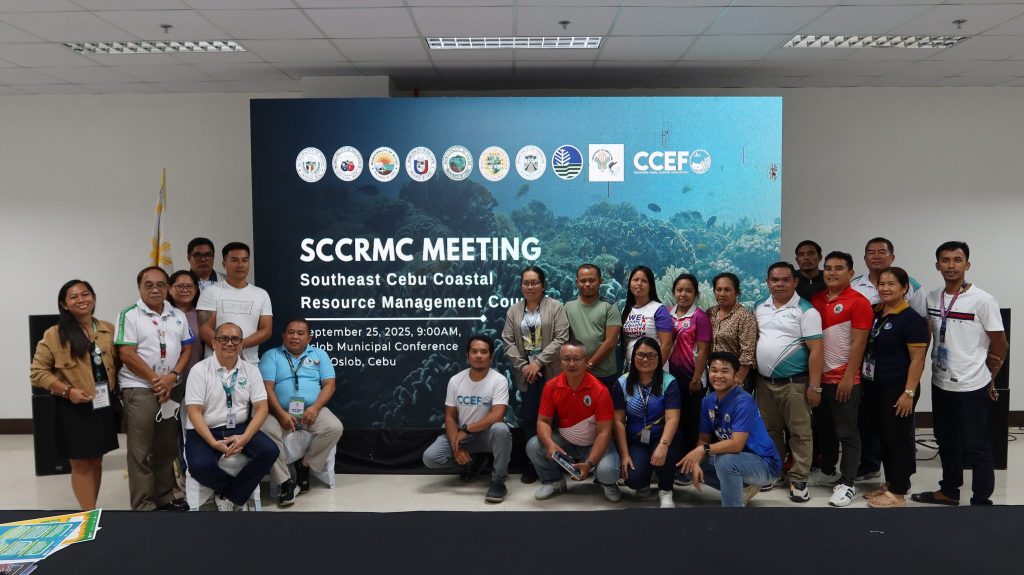
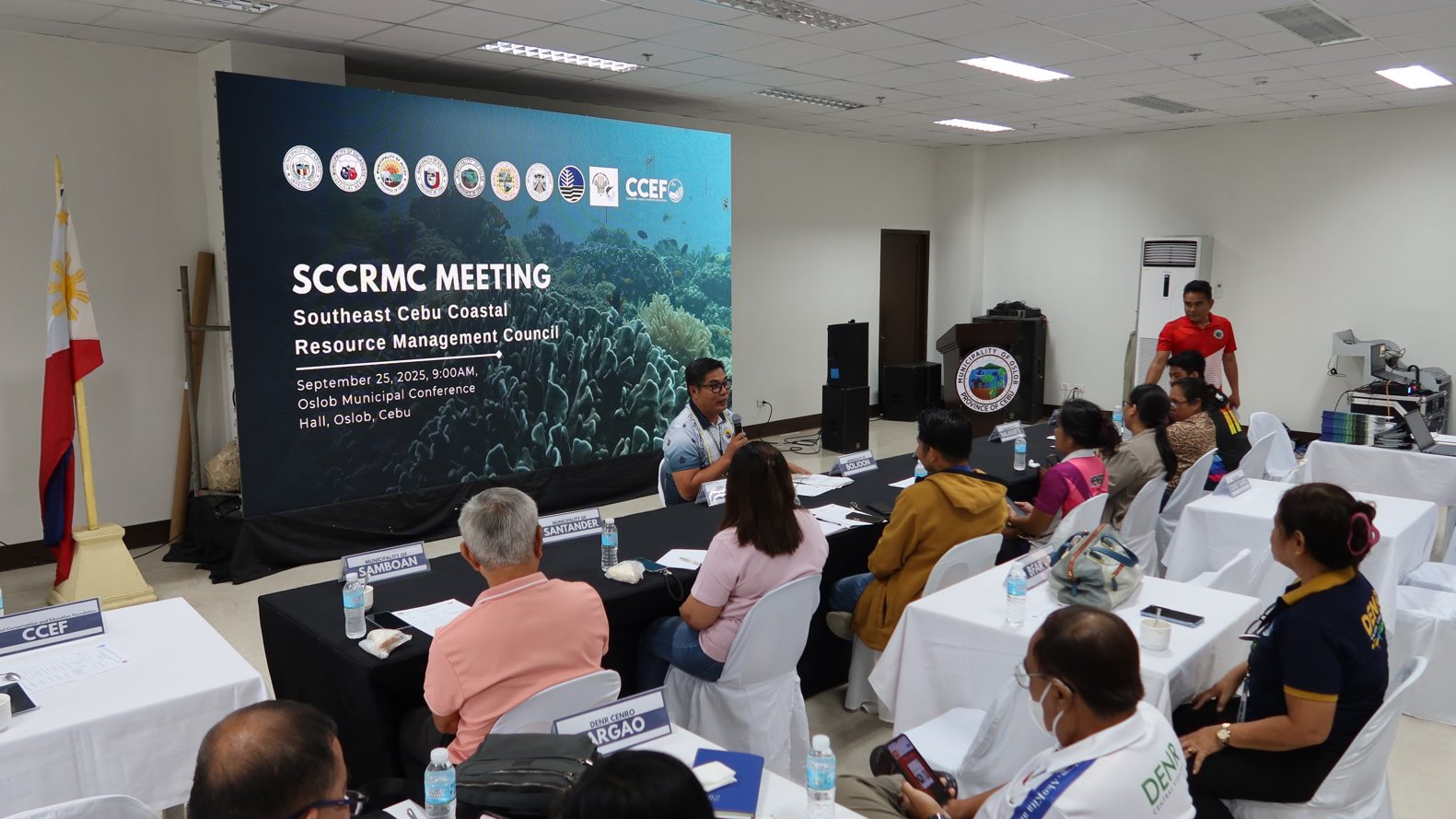
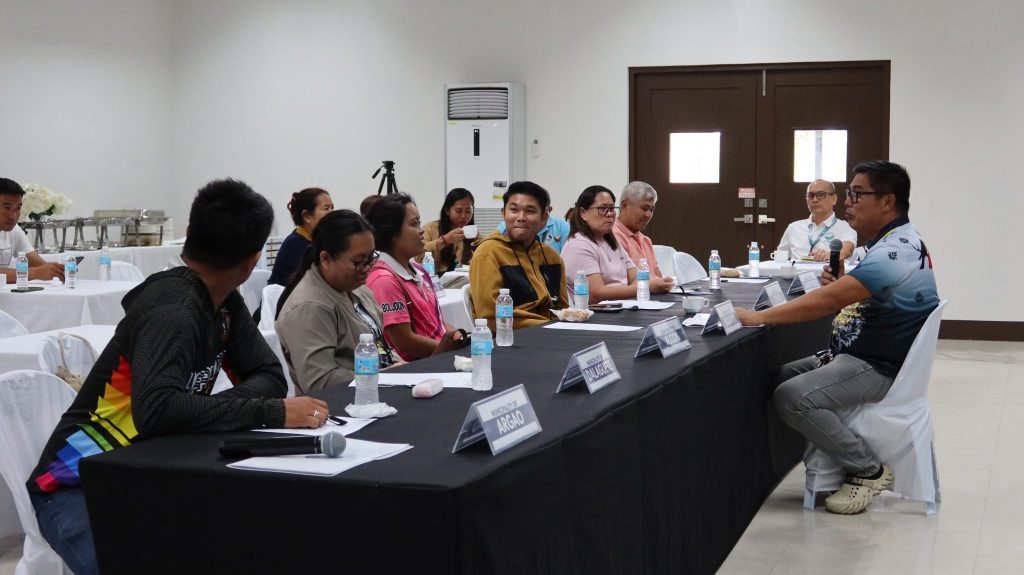
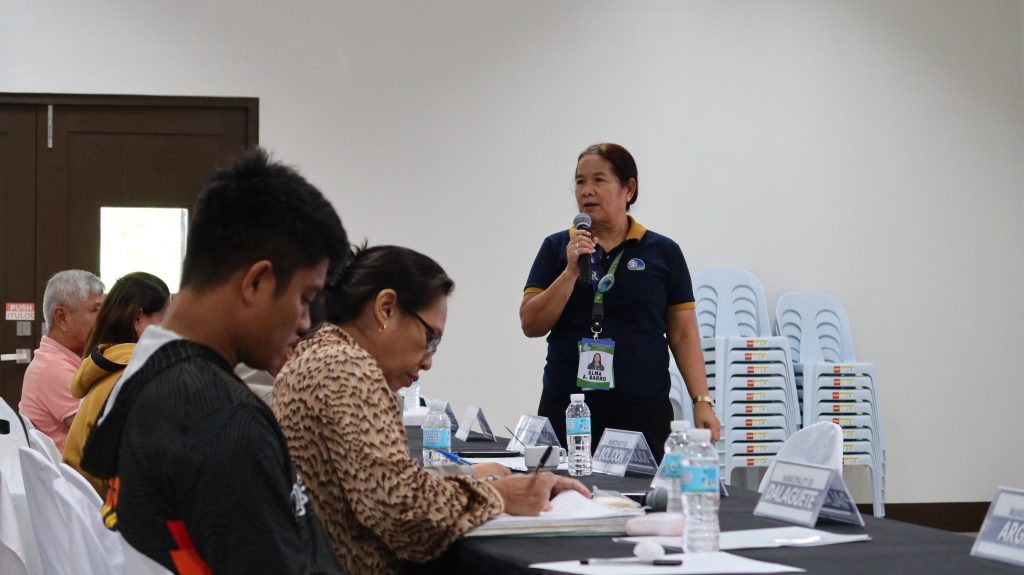
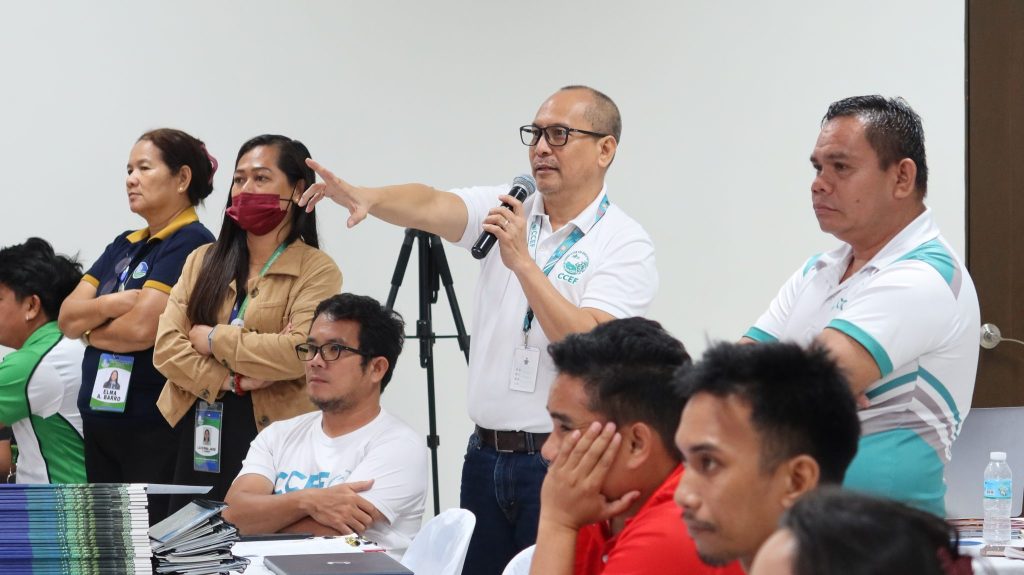
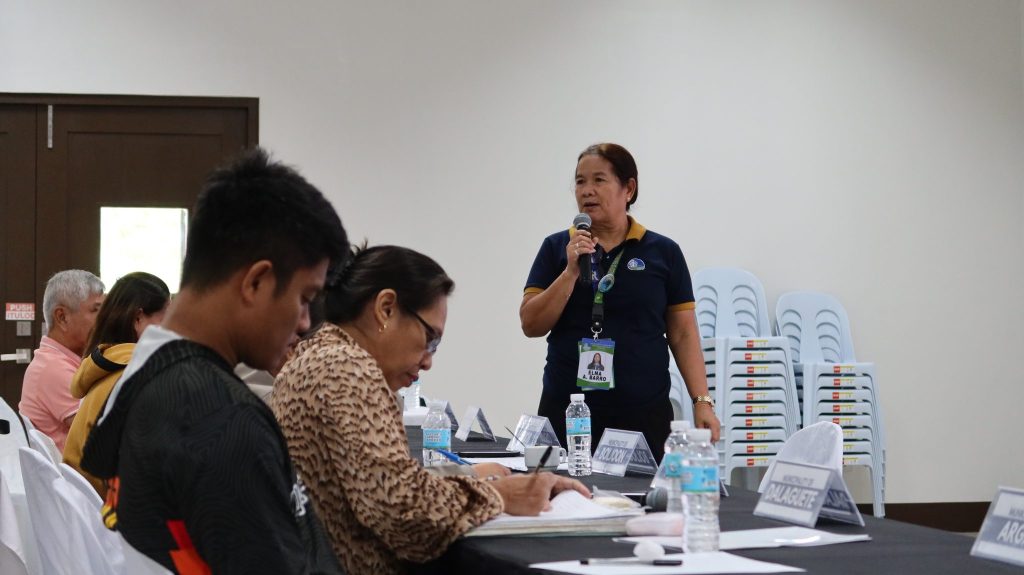
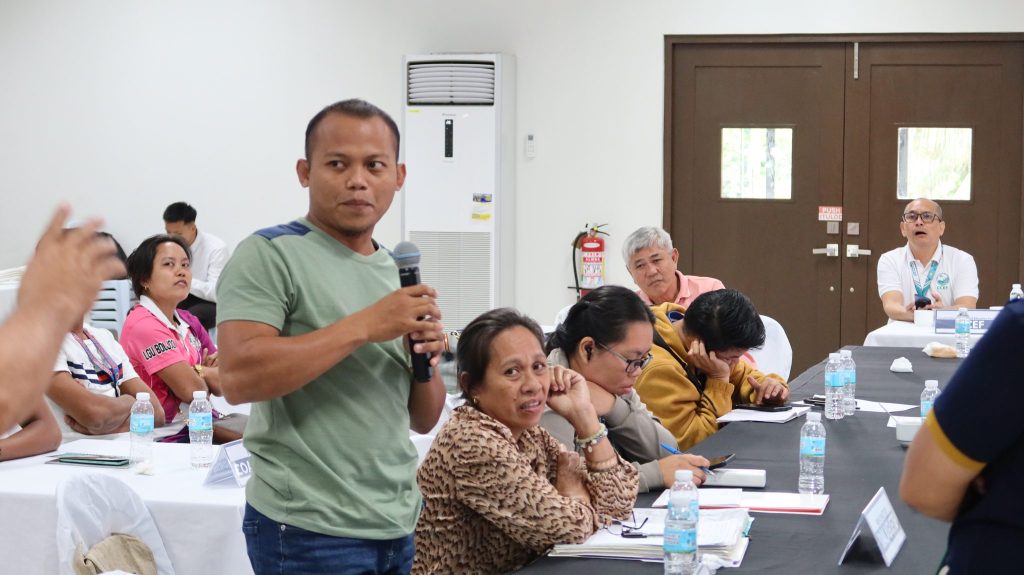
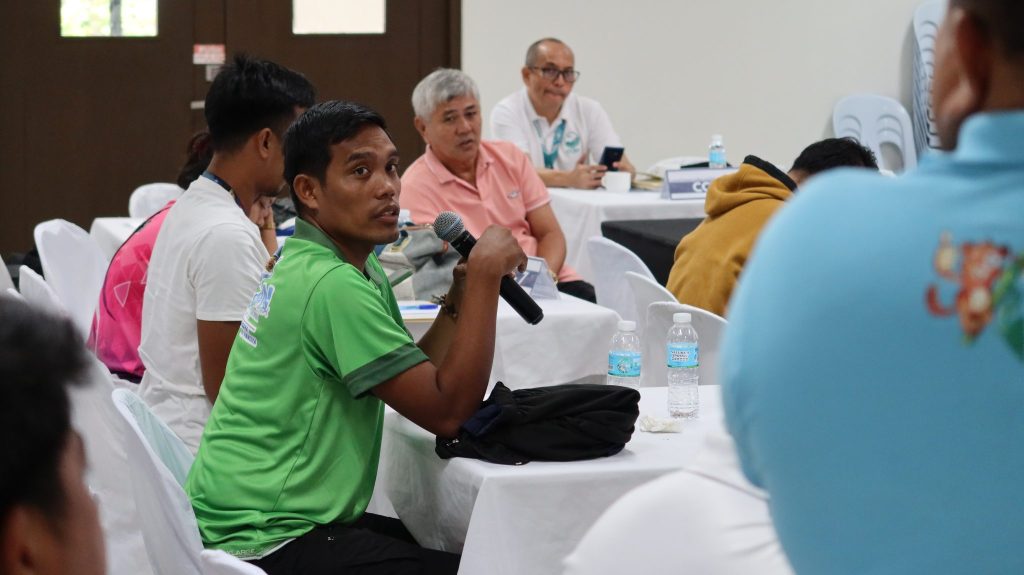
September 25, 2025 Oslob Municipal Conference Hall – The Southeast Cebu Coastal Resource Management Council (SCCRMC) convened for its quarterly meeting with support from the Unico Conservation Foundation through the Networking of MPAs thru Coastal LGUs Alliance Project (NMCLAP). The session gathered representatives from member LGUs, the SCCRMC Secretariat, partner organizations, and key stakeholders, including DENR Argao CENRO Officer Mr. Vicente Rustico M. Calizar, RPF, and CCEF Executive Director Mr. Glenn R. Labrado.


While some council members were represented by their technical staff, the meeting advanced with productive dialogue and shared commitments. Key updates included the financial report, the SCCRMC-ADABOSS Memorandum of Agreement, and the revised Work and Financial Plan. A highlight was the presentation of the SCCRMC Database under NMCLAP—a centralized tool that not only strengthens data-driven decision-making but also serves as a secure repository for the council’s key documents. Designed to support more responsive and organized coastal governance, the database ensures that essential CRM materials remain accessible, current, and aligned with the council’s evolving priorities.

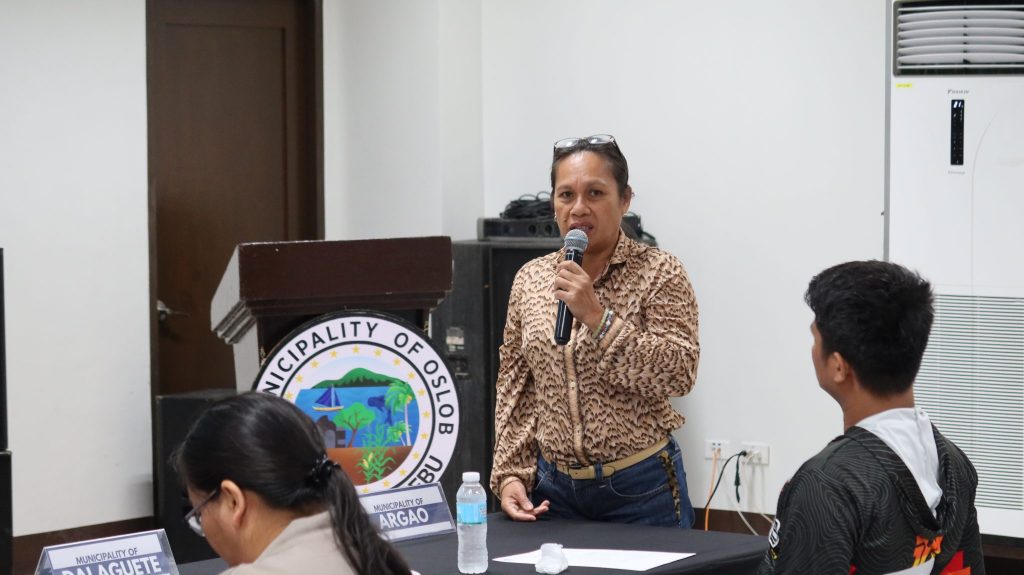


In his closing remarks, Mr. Glenn R. Labrado, in his first formal engagement with SCCRMC as CCEF’s new Executive Director, encouraged the council to revitalize its collaborative efforts and reaffirmed CCEF’s commitment to ongoing technical support. He reflected on SCCRMC’s legacy, recalling its recognition as the Most Outstanding MPA Network at the 2021 Para El Mar MPA Awards—a tribute to the dedication of LGU leaders, technical staff, and former CCEF support team. Acknowledging current challenges, he urged representatives to draw strength from the council’s history and pursue renewed excellence through sustained coordination and shared responsibility.

Strengthening coastal resource management (CRM) councils like the SCCRMC has consistently been linked to improved governance, deeper community ownership, and more adaptive, ecosystem-based approaches to marine conservation. When local councils are equipped with reliable data systems, empowered through inter-LGU collaboration, and supported by sustained technical assistance, they become catalysts for reversing ecological decline, enhancing fisheries productivity, and building long-term climate resilience.
As Ferrer and Nozawa emphasize, “local institutions are the key to translating conservation goals into community benefits” (Ferrer & Nozawa, 2001), while Mungcal’s study on CB-CRM governance highlights how “institutional frameworks and community participation promote good local eco-governance in the management and protection of finite marine resources” (Mungcal, 2020).

As SCCRMC looks ahead, its renewed commitment to collaboration, transparency, and strategic planning signals a deeper resolve to protect Southeast Cebu’s coastal ecosystems—not only for biodiversity, but for the communities whose lives and livelihoods depend on them.