Six municipalities agree on one monthly schedule, based on fish spawning research
LARENA, SIQUIJOR, October 9, 2026
Siquijor’s municipalities have long recognized that fish need time to reproduce, but they have not agreed on when to provide it. San Juan observed the new moon and the two days after it. Lazi, Larena, Maria, and Enrique Villanueva observed one day before, during, and one day after the new moon. Siquijor municipality deferred implementation until a scientific study could guide the schedule.
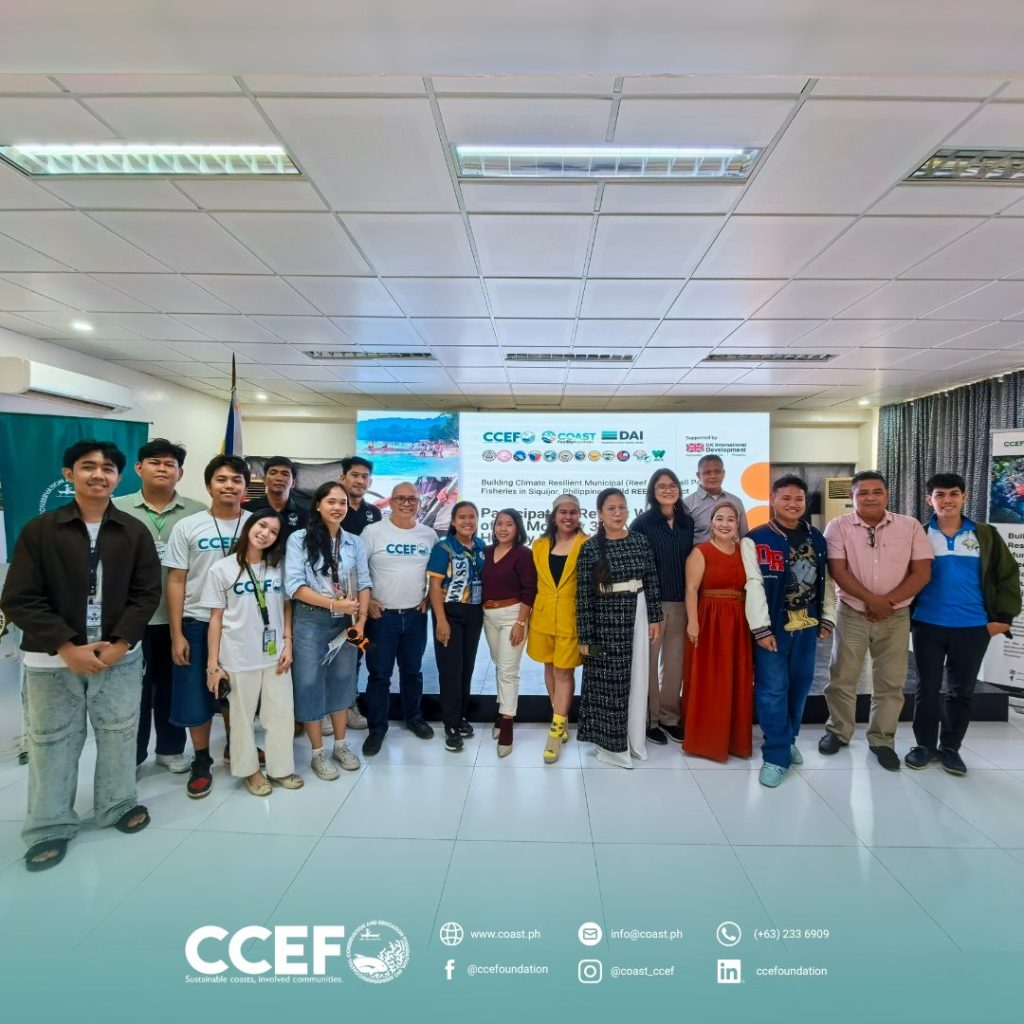
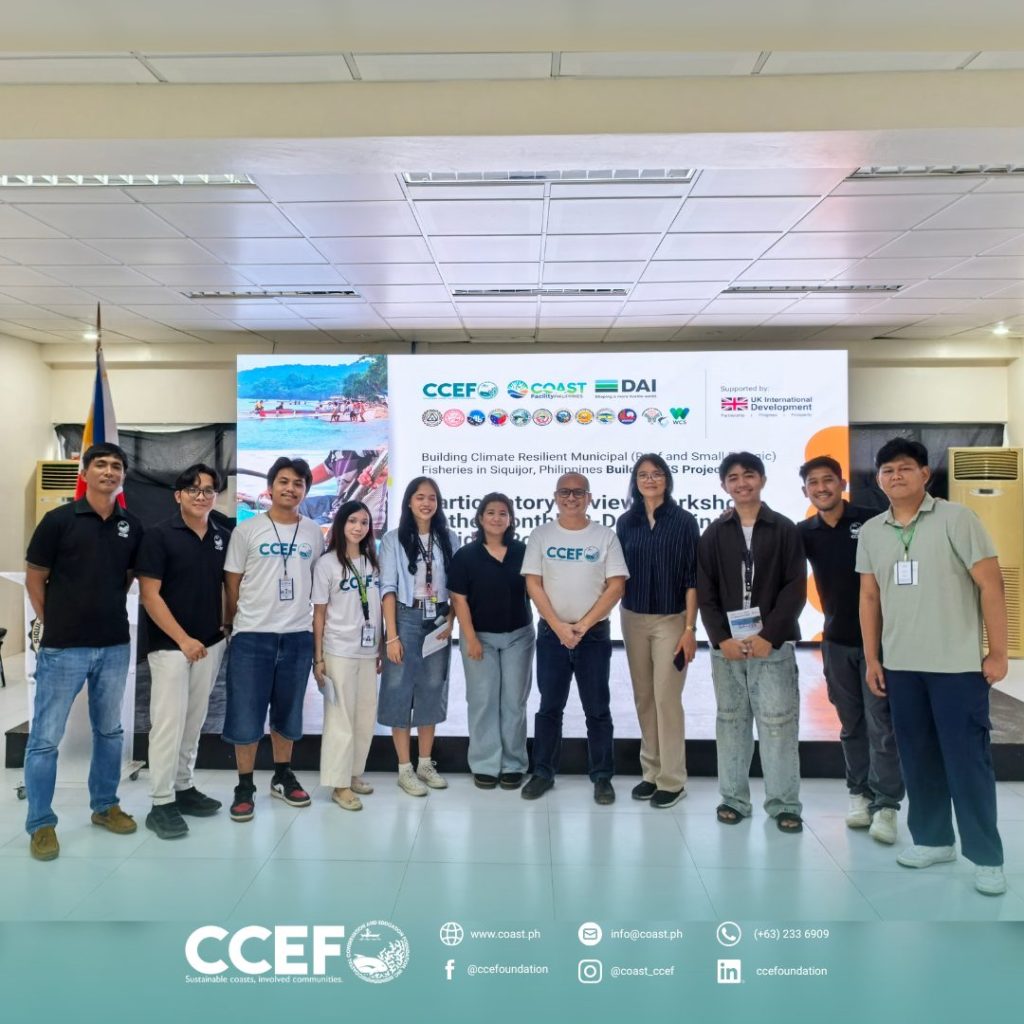
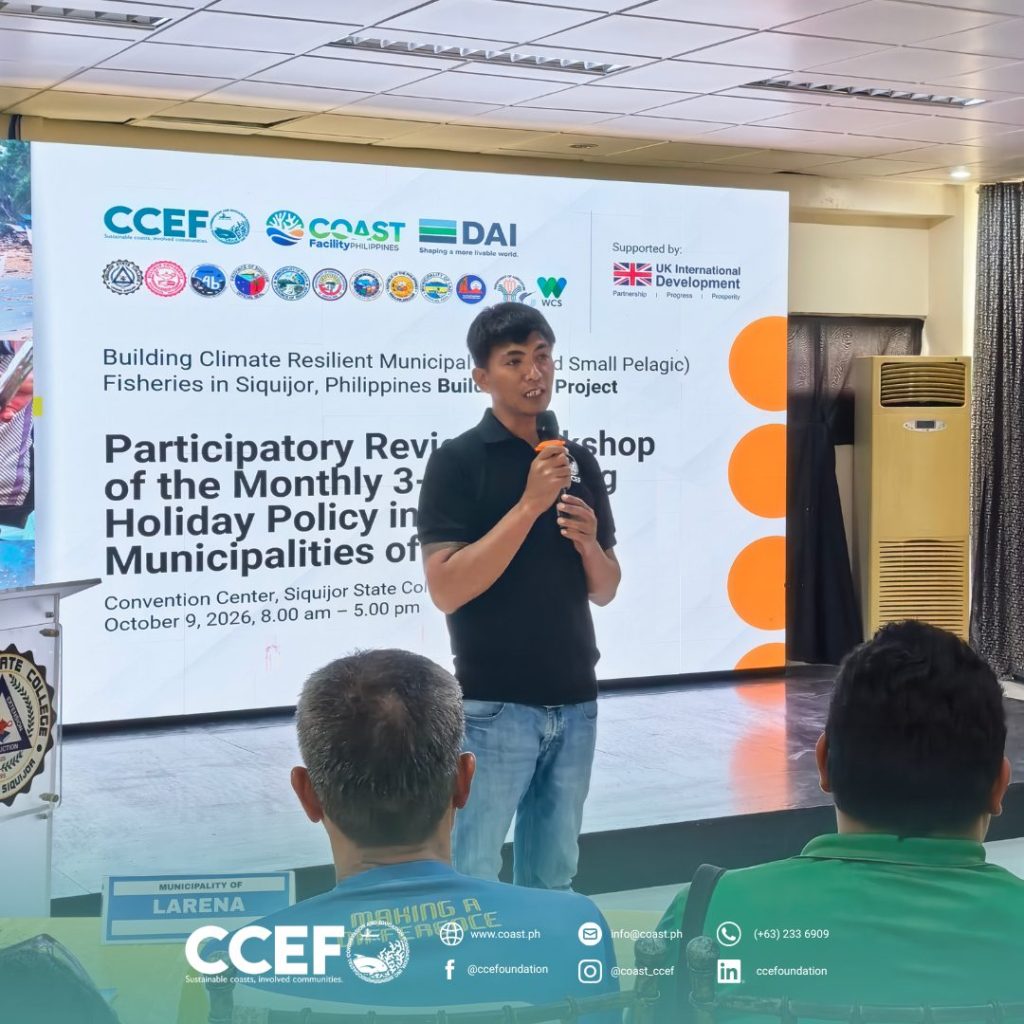
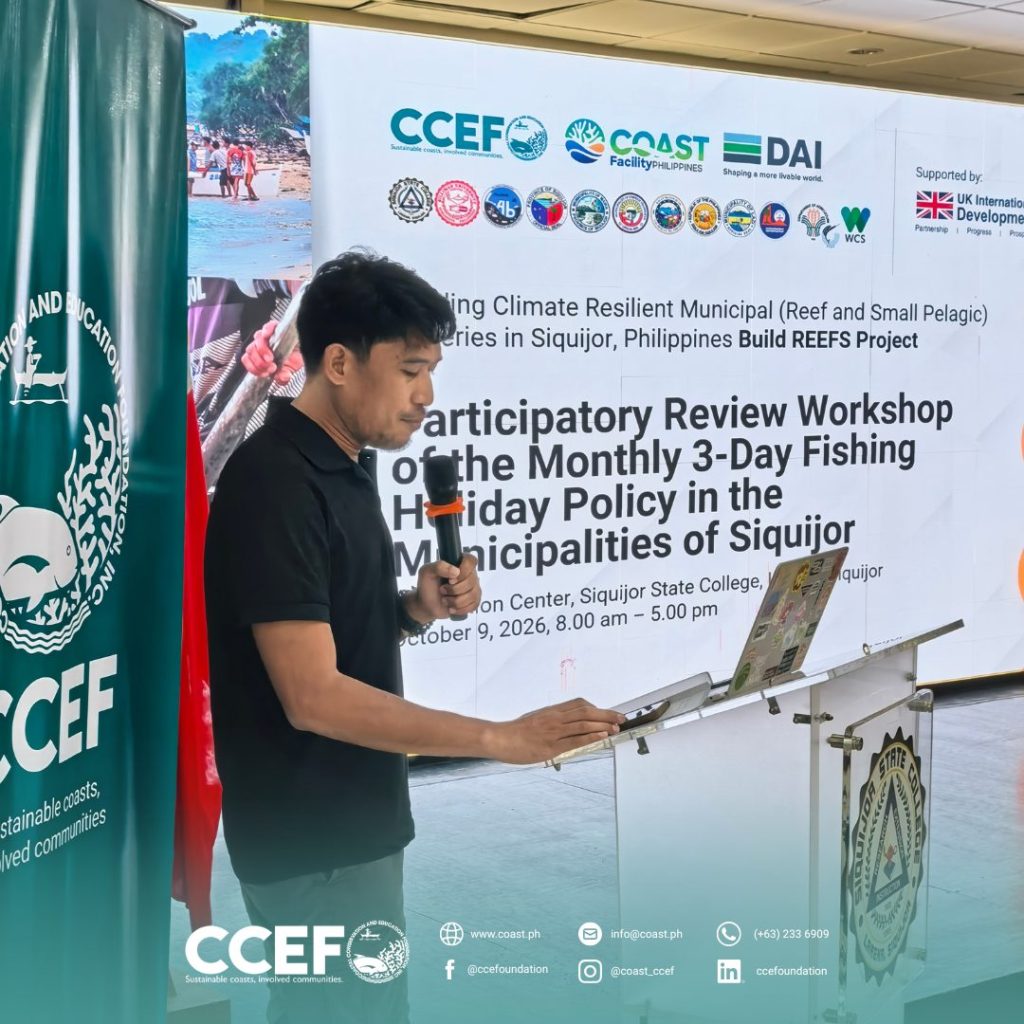
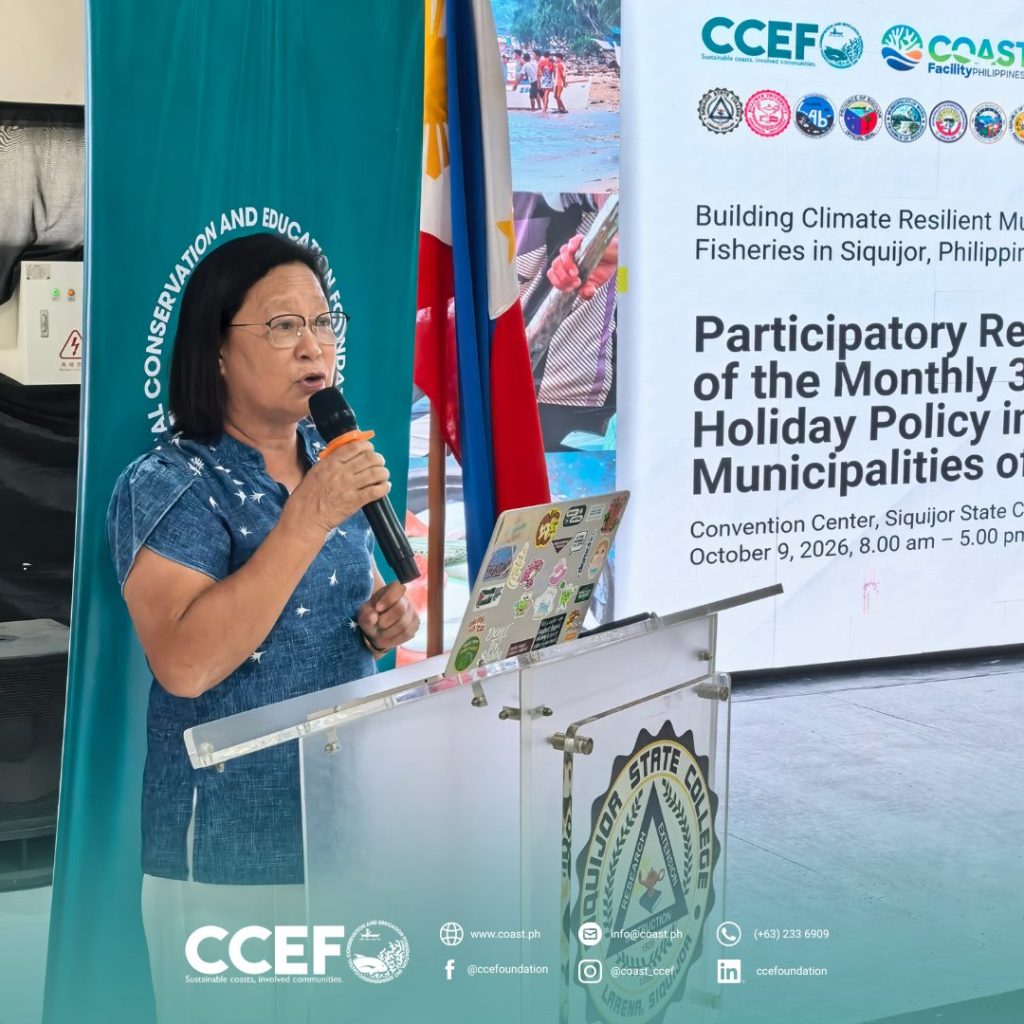
On October 9, the Coastal Conservation and Education Foundation, Inc. (CCEF) and Siquijor State College (SSC) convened a Participatory Review Workshop of the Monthly 3-Day Fishing Holiday Policy in the Municipalities of Siquijor, at the SSC Convention Center. Representatives of the Provincial Government of Siquijor, six municipalities, fisherfolk organizations, government agencies, and partner institutions gathered to review the scientific evidence and agree on a way forward.
Behind the Study
The workshop was anchored on the Fish Reproductive Biology and Gonadal Maturity Staging Study, conducted from May to July 2026 under the Building Climate Resilient Municipal (Reef and Small Pelagic) Fisheries in Siquijor (Build REEFS) Project. Build REEFS is implemented by CCEF and funded by UK COAST. The study was carried out in partnership with SSC and the Silliman University Institute of Environmental and Marine Sciences (SU-IEMS), with the support of the Office of the Provincial Agriculturist, participating local government units (LGUs), and complemented by the 2025 Fish Catch Monitoring Survey of the Wildlife Conservation Society (WCS).
Opening the Day
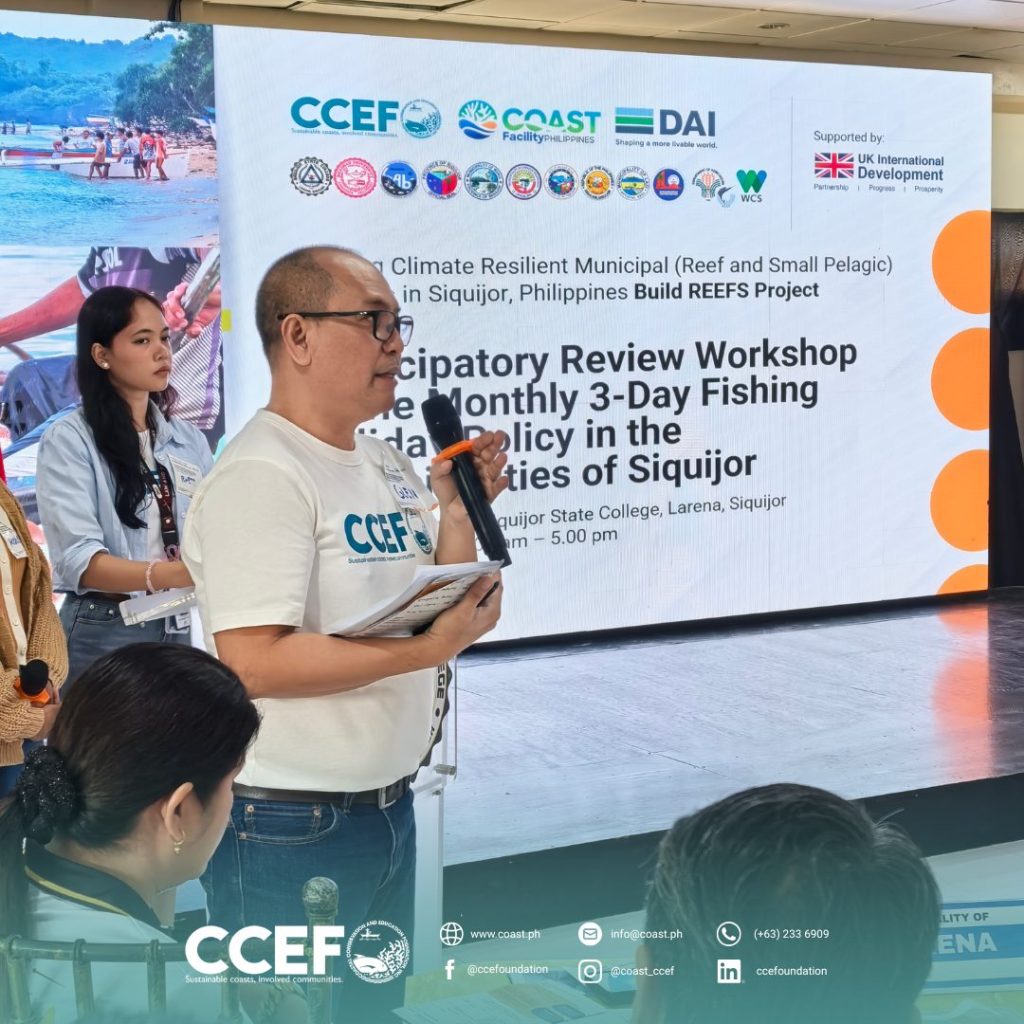
The program opened with messages from SSC President Dr. Steven J. Sumaylo and CCEF Executive Director Mr. Glenn R. Labrado. Mr. Dionel Molina, CCEF Marine Biologist, then presented the forum objectives and expectations.
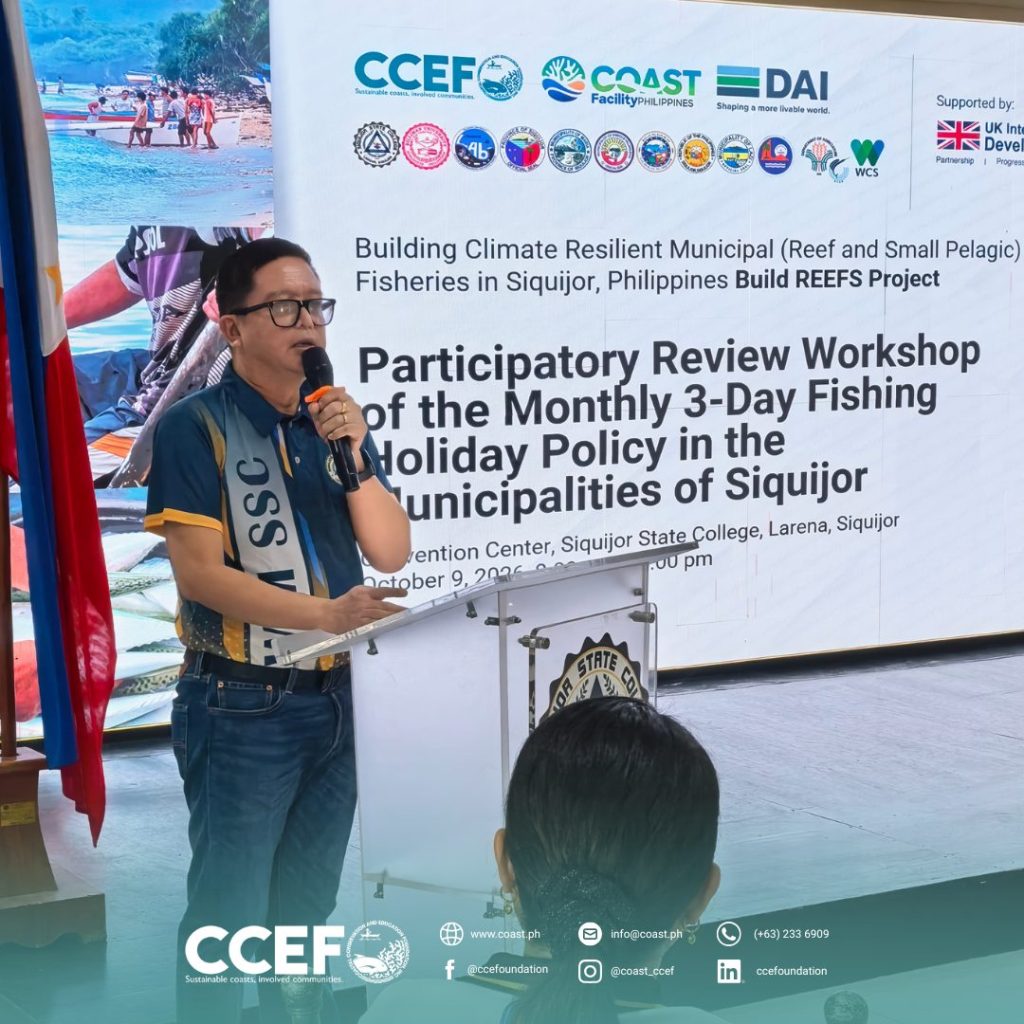
“At Siquijor State College, we value research that reaches the community and research that listens to the community. Through initiatives such as Build REEFS, we hope to keep generating knowledge that helps our municipalities protect our marine resources while supporting the people whose lives are closely connected to them.”
Dr. Steven J. Sumaylo, SUC President II, Siquijor State College
“This is an important activity, and we hope it helps align our fishing ban policy across Siquijor using scientific evidence. After hearing your concern that this Gonadal Study was needed to strengthen that alignment, we did our best to find ways to make it happen. We are very happy that the LGUs were also very supportive, offering their own resources and pooling them so the study could be done.”
Mr. Glenn R. Labrado, Executive Director, CCEF
What the Science Showed
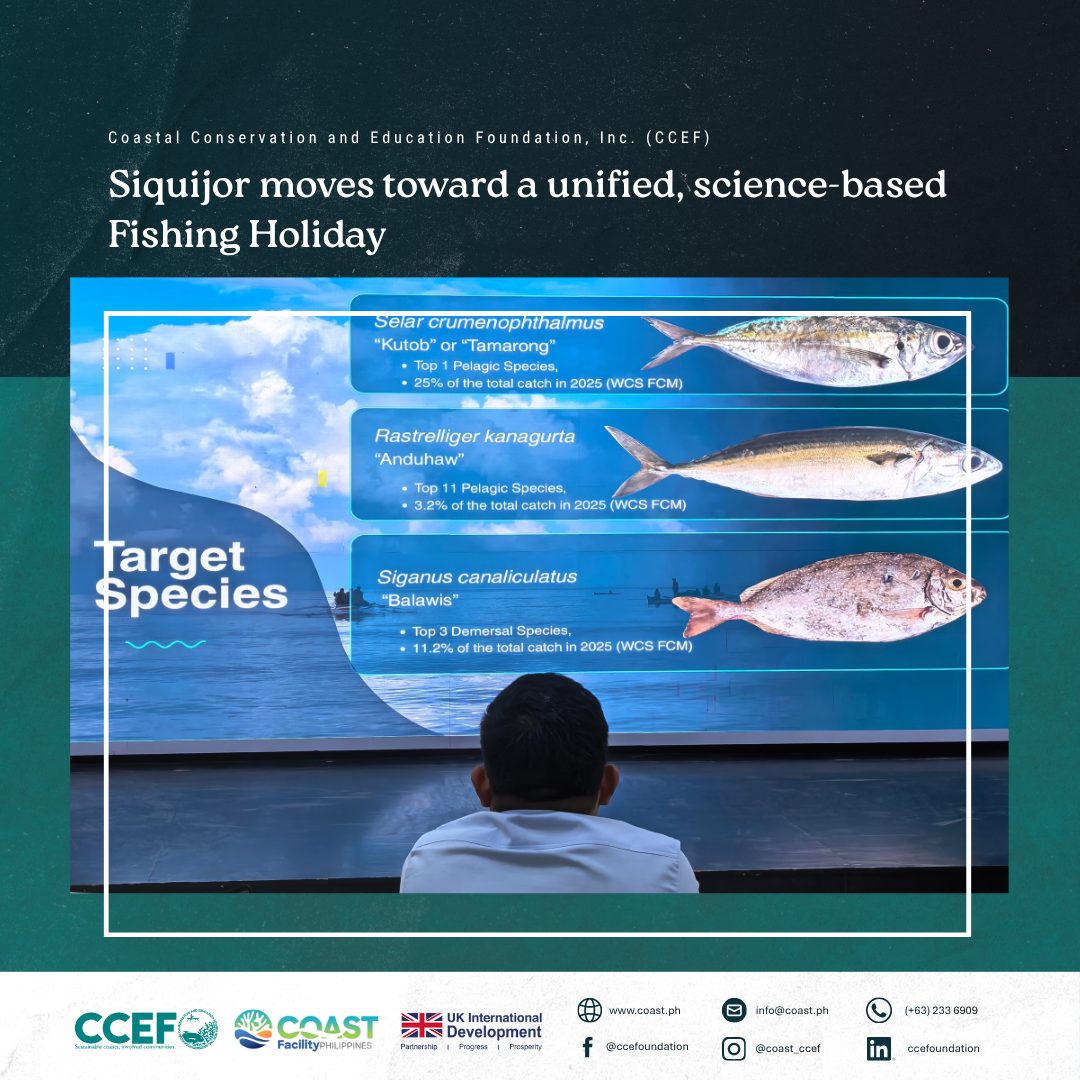
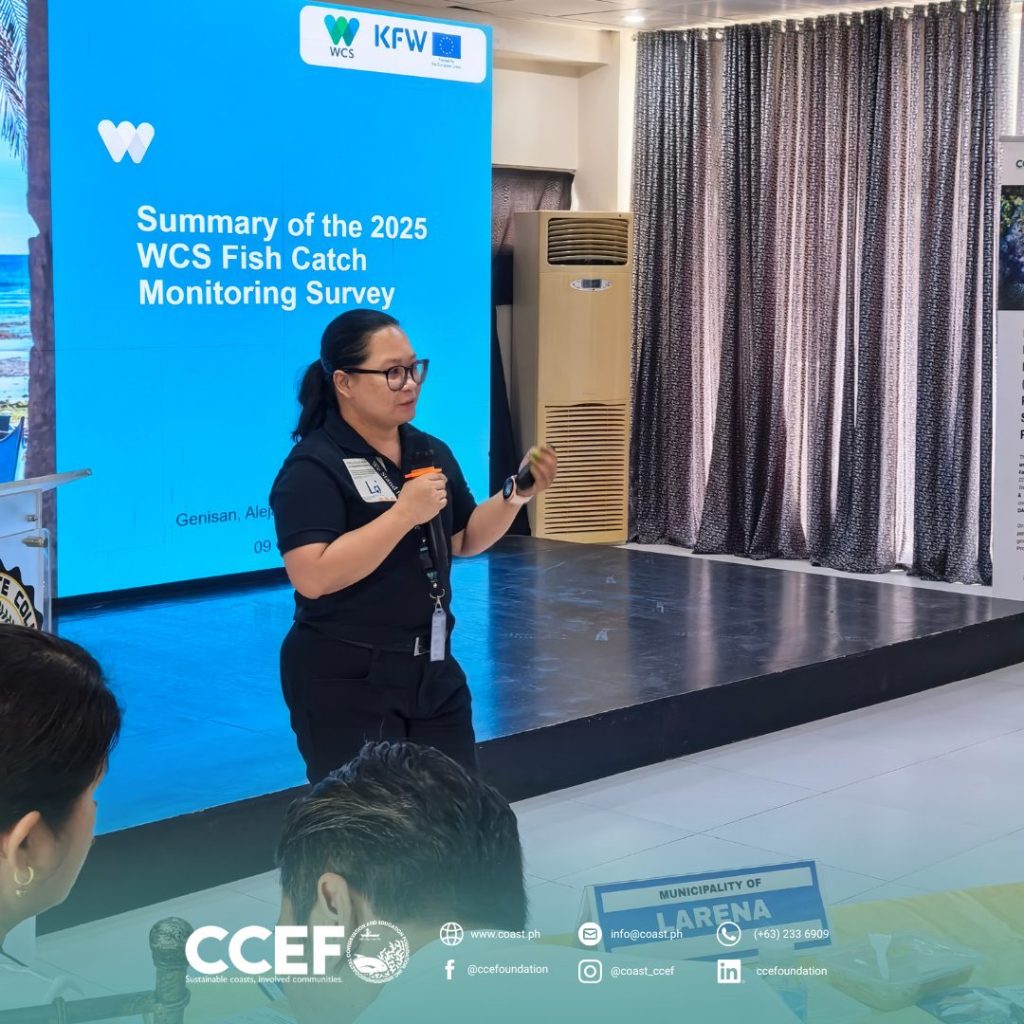
The morning session featured three presentations. Ms. Aleja Genisan, Field Operations Team Lead of WCS, summarized the 2025 Fish Catch Monitoring Survey. Dr. Aileen P. Maypa, Director of SU-IEMS and Build REEFS Science Advisor, gave an overview of reproductive biology in other commercially important fishes. Ms. Janine S. Gom-os, Research Staff of SSC, presented the study on three species: Selar crumenophthalmus (kutob), Rastrelliger kanagurta (anduhaw), and Siganus canaliculatus (balawis).
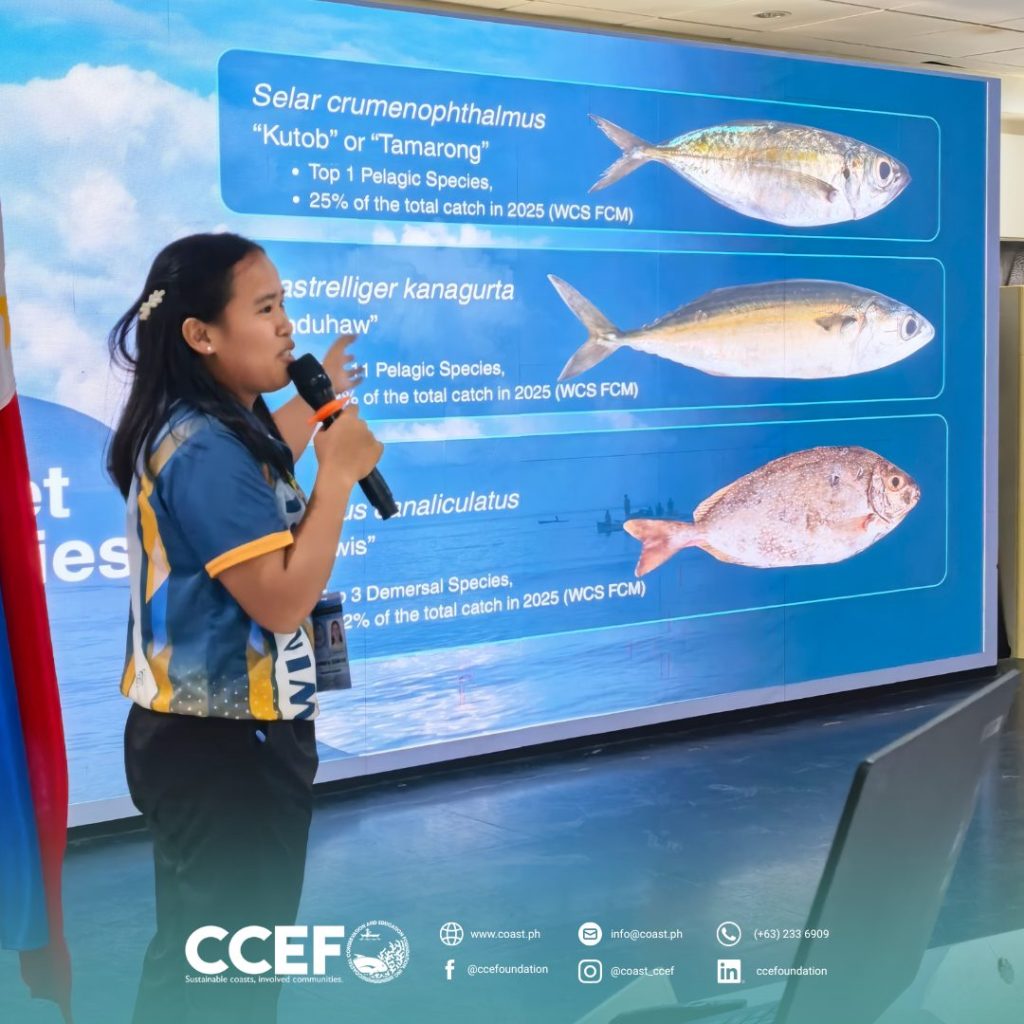
The study set out to determine whether the fishing holidays coincide with the fish’s actual spawning period. Its findings showed that spawning peaks on the new moon and the two days that follow.
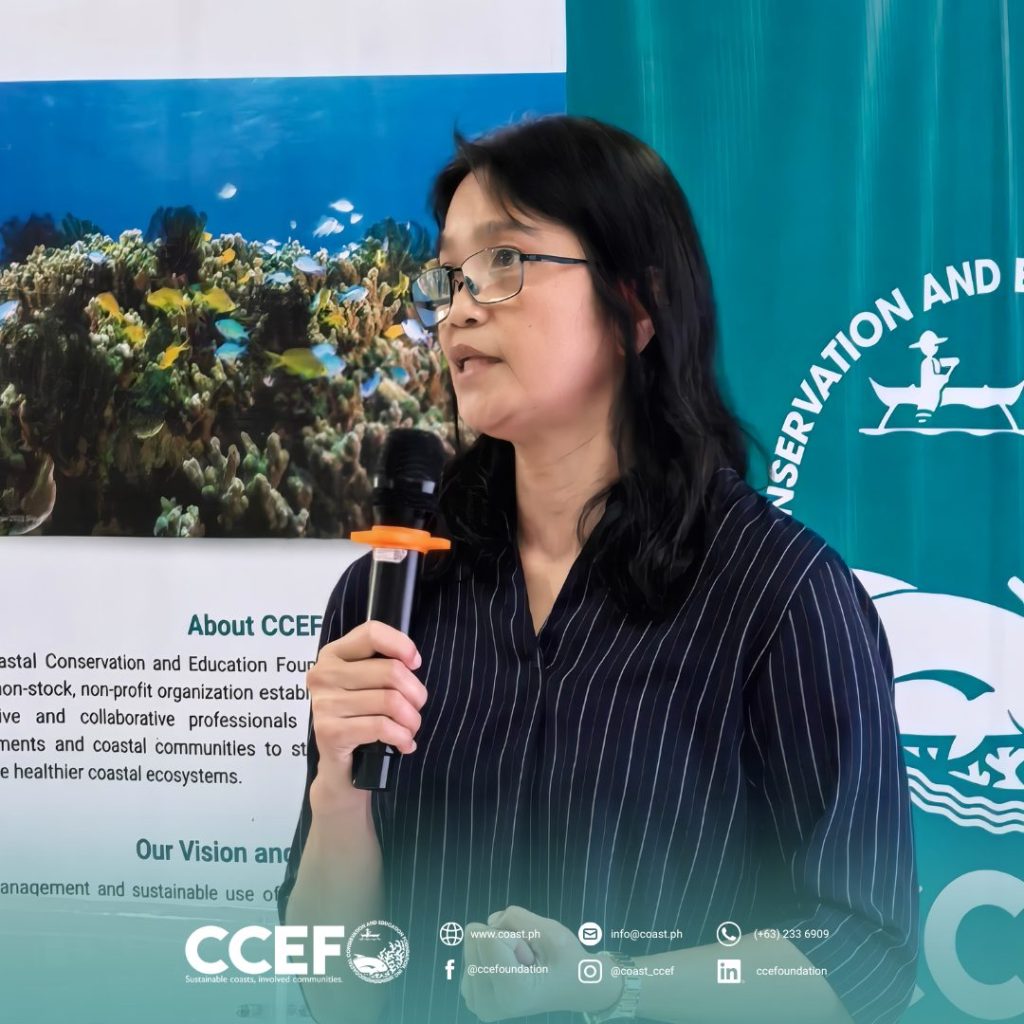
“The question we set out to answer was whether our fishing holidays match the maturity of the fish and their spawning. We targeted the new moon because the literature shows that peak spawning usually happens then, especially for pelagic and semi-pelagic fishes. Policy is always a compromise, but in science, we give you the truth.”
Dr. Aileen P. Maypa, Director, Silliman University Institute of Environmental and Marine Sciences, and Build REEFS Science Advisor
Hearing from the Frontline
In the afternoon, the workshop turned to the practical side of implementation. Mr. Darrell T. Pasco, Senior Aquaculturist of the Office of the Provincial Agriculturist, shared the experience of local governments in enforcing the fishing holiday. His message resonated with the participants, who agreed unanimously to adopt a uniform fishing holiday.
“In the two years we have implemented the fishing holiday, since we are the frontline of enforcement, our problems arise in boundary disputes. In San Juan, for example, we have no device to determine the exact boundary. If there are some changes, our request is to make it smoothly implementable and consistent with the scientific findings. Let us do it in one setting, so the ordinance is easier to implement. A uniform fishing holiday also reduces costs: when we look out at the sea, no one is allowed to fish, so it is easy to pinpoint who is fishing and where they should be.”
Mr. Darrell T. Pasco, Senior Aquaculturist, Office of the Provincial Agriculturist, Province of Siquijor
One Schedule, Backed by Law
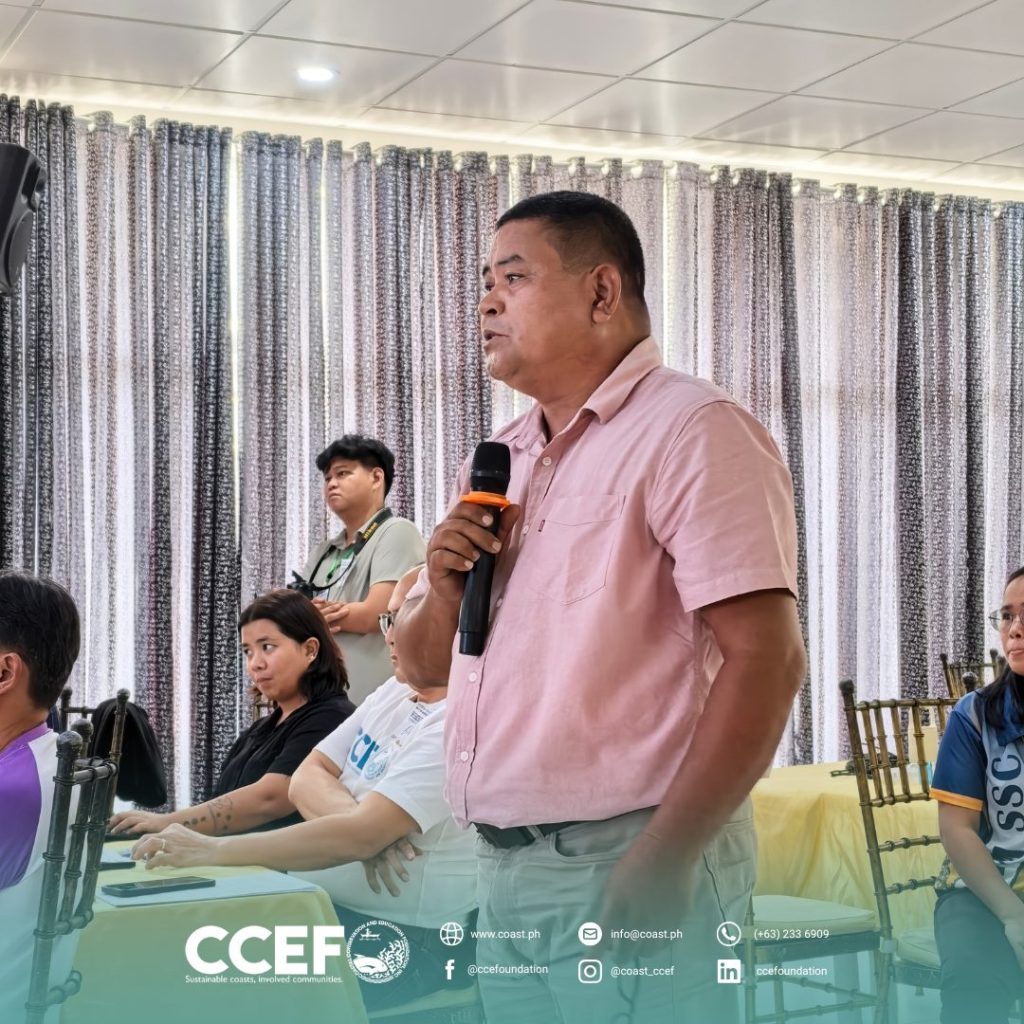
The agreed schedule is a single monthly fishing holiday on the new moon, and the first and second days after the new moon. Each municipality will amend its ordinance accordingly, translating scientific evidence into legal action. SSC also committed to presenting the study to the municipalities and providing technical assistance during local fisheries consultations.
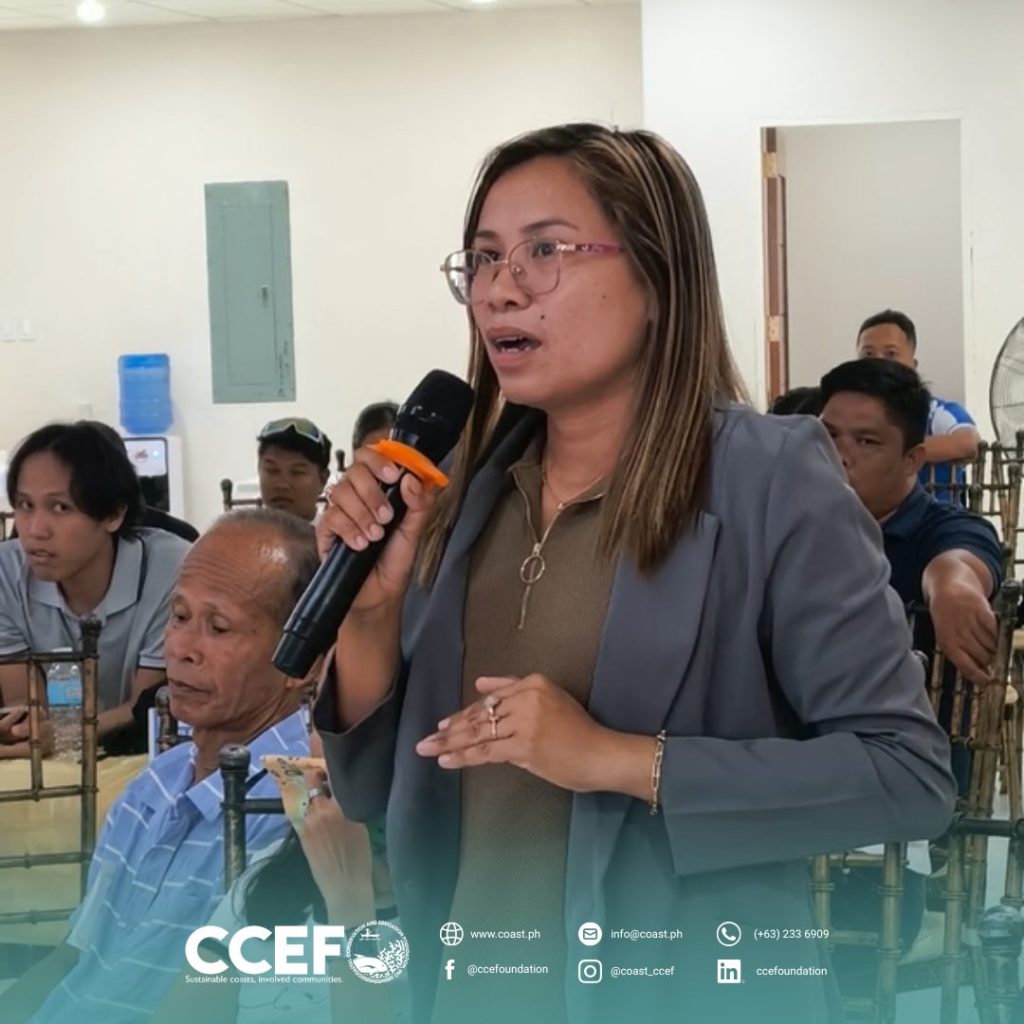
“As government, we are here to regulate, not to prohibit (fishers from fishing). Whatever is agreed upon, we are willing to amend. A municipal ordinance can be amended if it is not effective, especially when there are science-based results. The LGU can do so at any time, and if we need to amend, we will.”
Ms. Azineth S. Tancogo, Municipal Agriculturist, Maria
Why It Matters
Fragmented schedules have given way to a unified, province-wide fishing holiday timed to protect fish when they spawn. The initiative offers a replicable model for science-based, community-led fisheries management. In her closing remarks, Provincial Agriculturist Evangeline Baroy affirmed that the outcome reflects the collaboration of all partners.
“I am very happy and grateful for everyone’s collaborative effort. We have clarified the goals and objectives of the fishing holiday based on research, and I thank CCEF, SSC, and Siliman University for supporting this study. We are now harmonized and clear, and we are no longer working on assumptions in our decisions. After this activity, we can expect a harmonious implementation of the fishing holiday in the province of Siquijor.”
Ms. Evangeline Baroy, Provincial Agriculturist, Province of Siquijor
Looking Ahead
With the schedule agreed, the focus now shifts to implementation. Each municipality will move to amend its ordinance, while CCEF Build REEFS Project team and SSC present the study to the local governments and provides technical assistance during local fisheries consultations. Through the Build REEFS Project, CCEF and its partners will continue to support the process, so that Siquijor’s fishing holiday is consistent across municipalities, enforceable, and grounded in science.