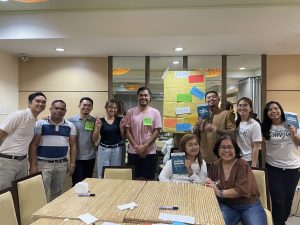
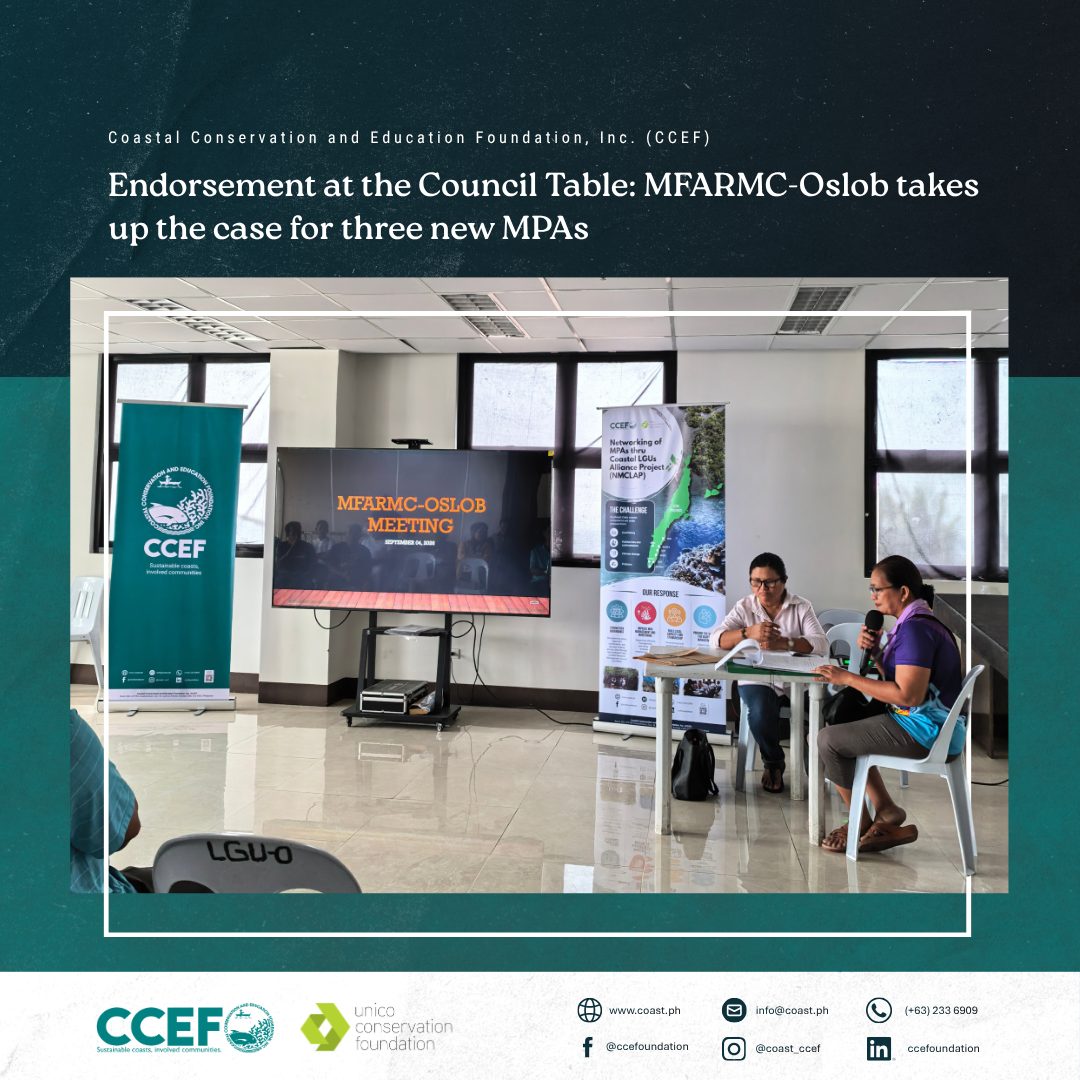
OSLOB, Cebu – September 4, 2026
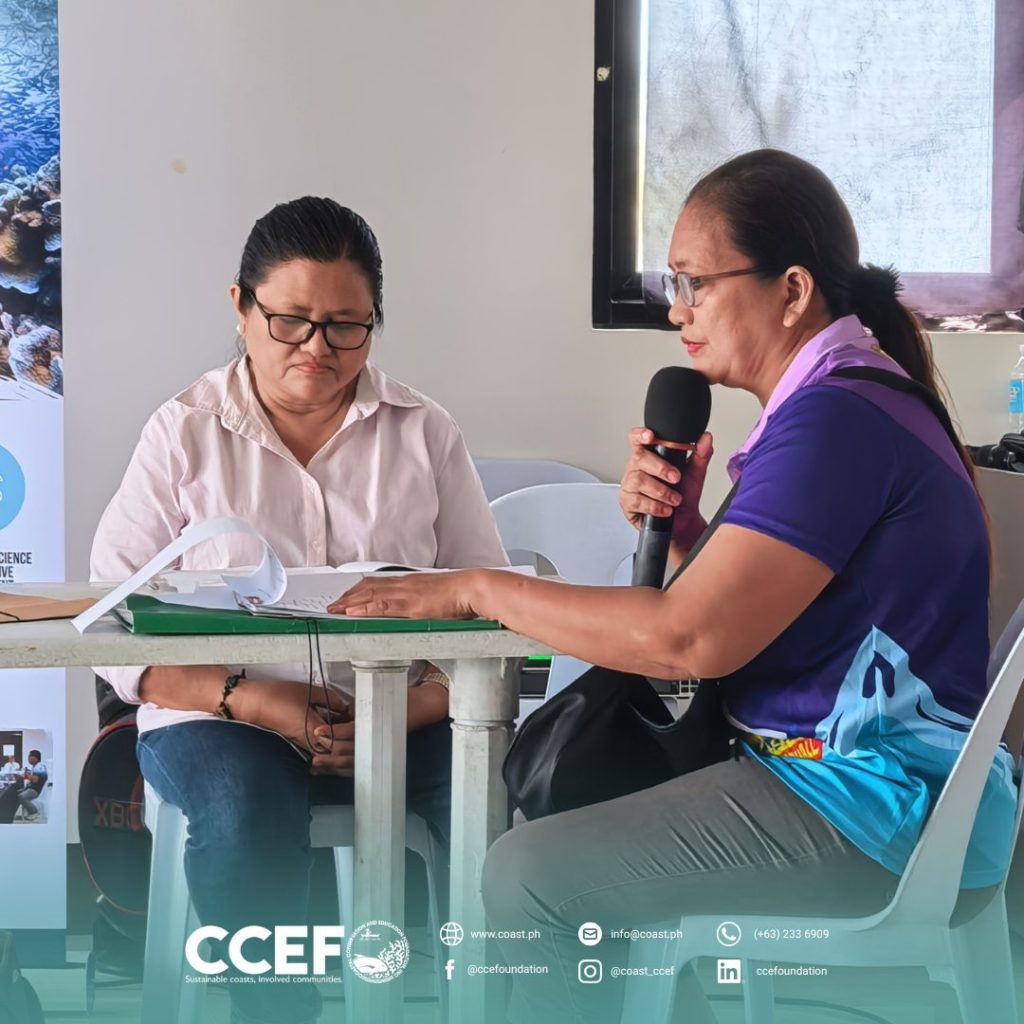
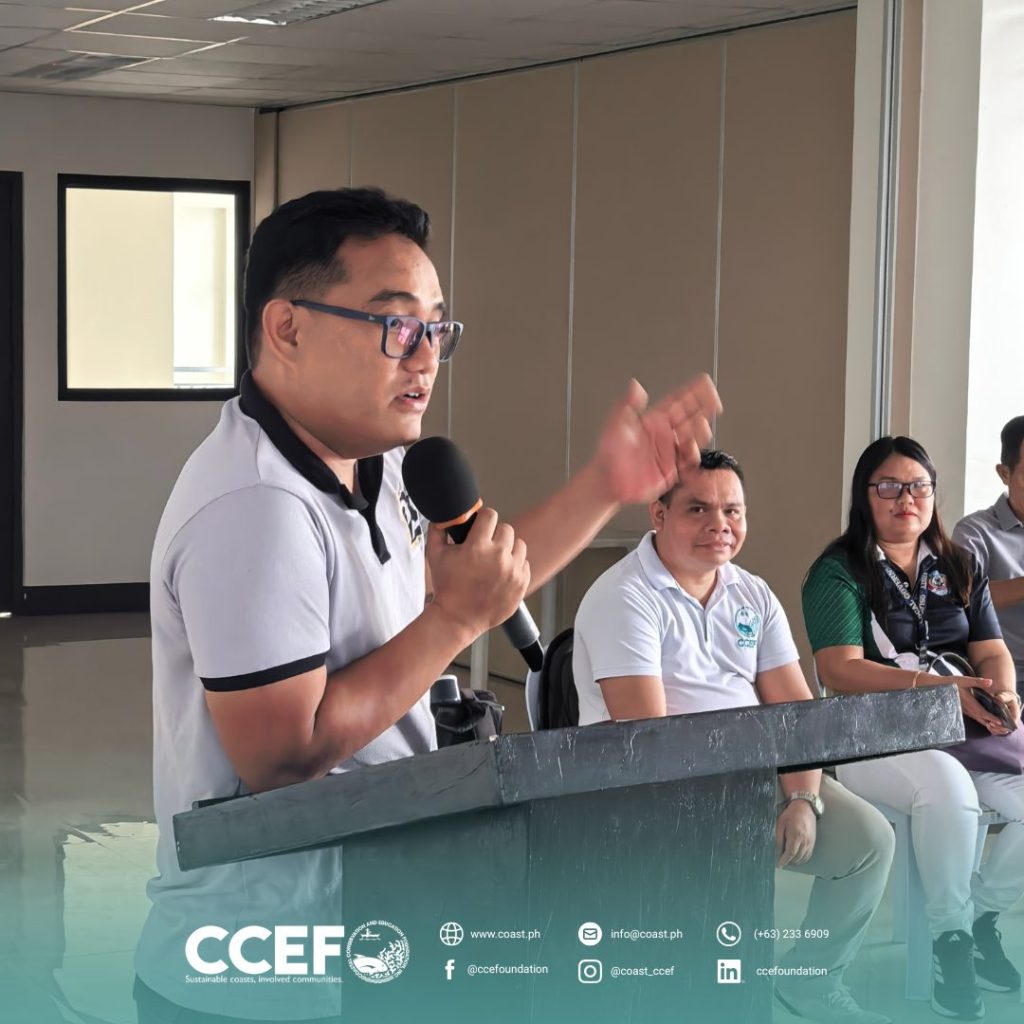
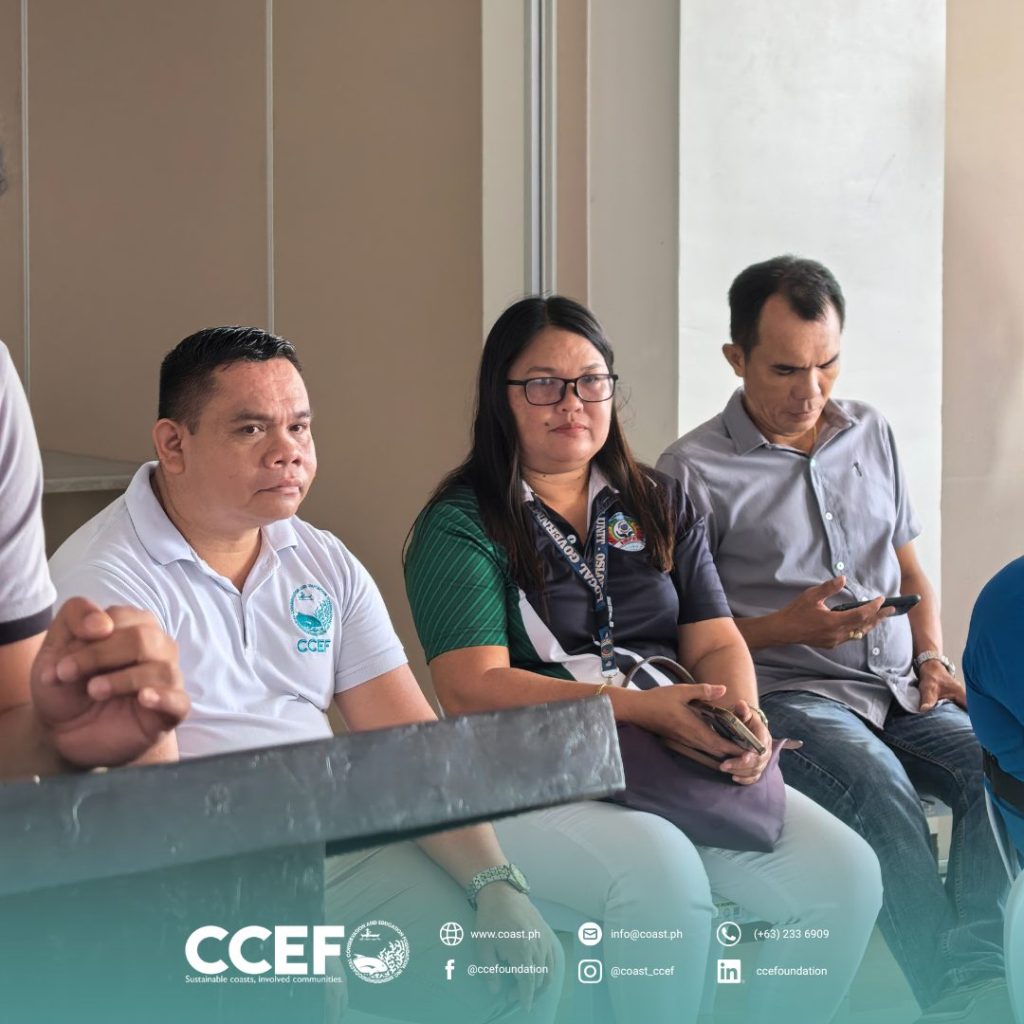
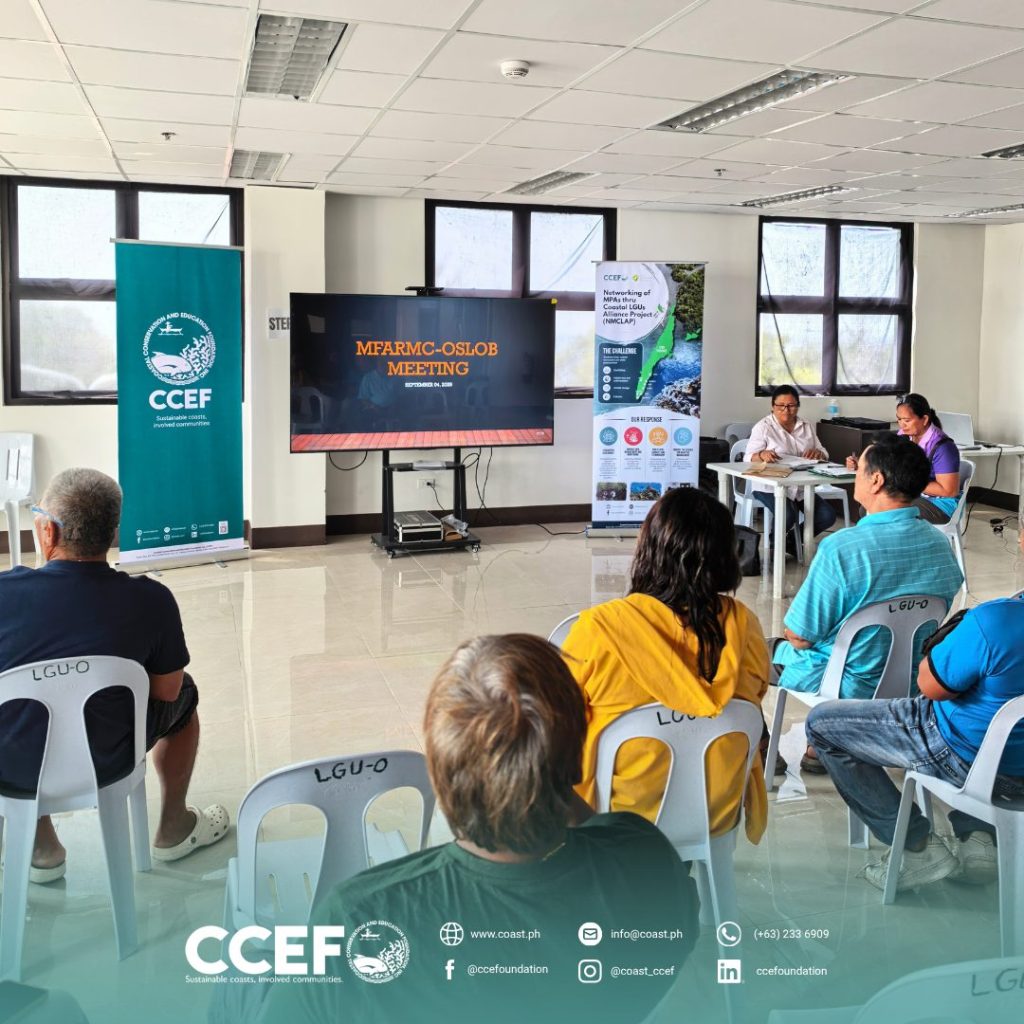
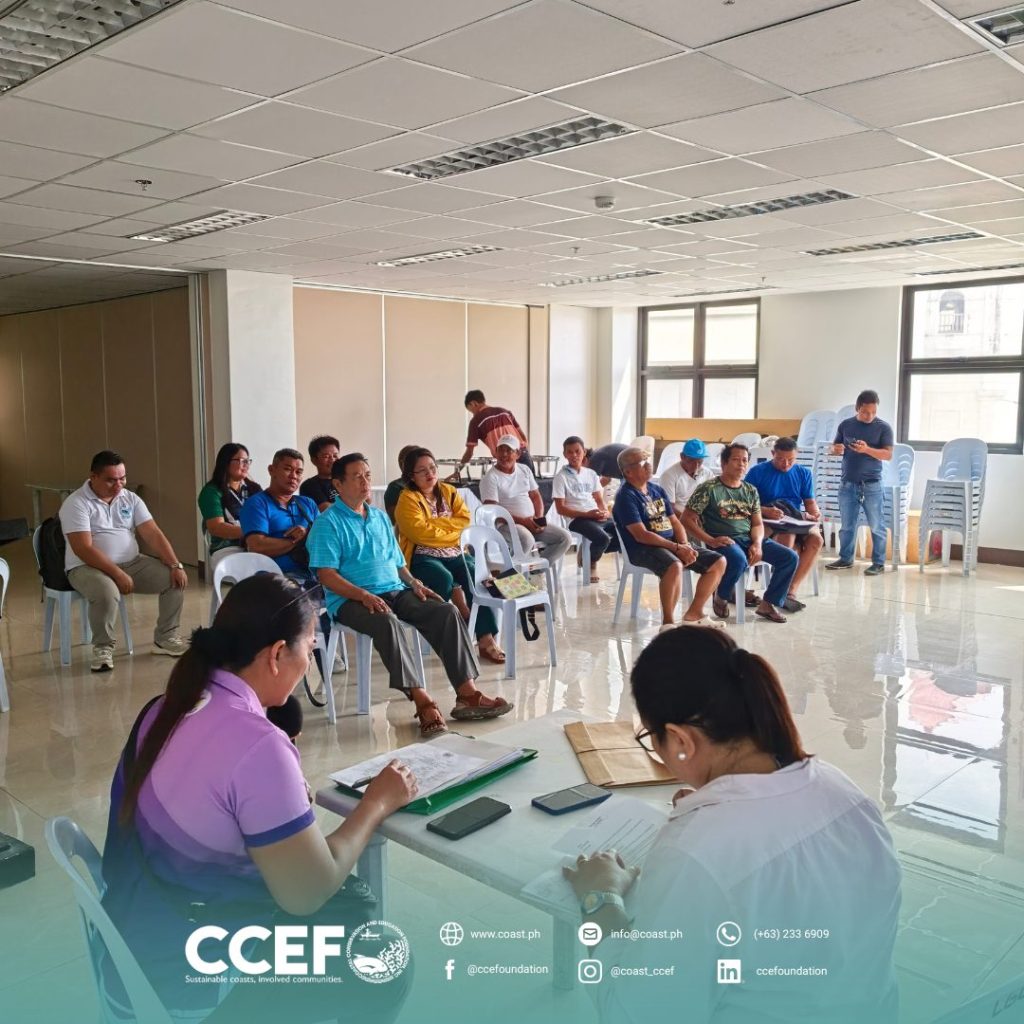
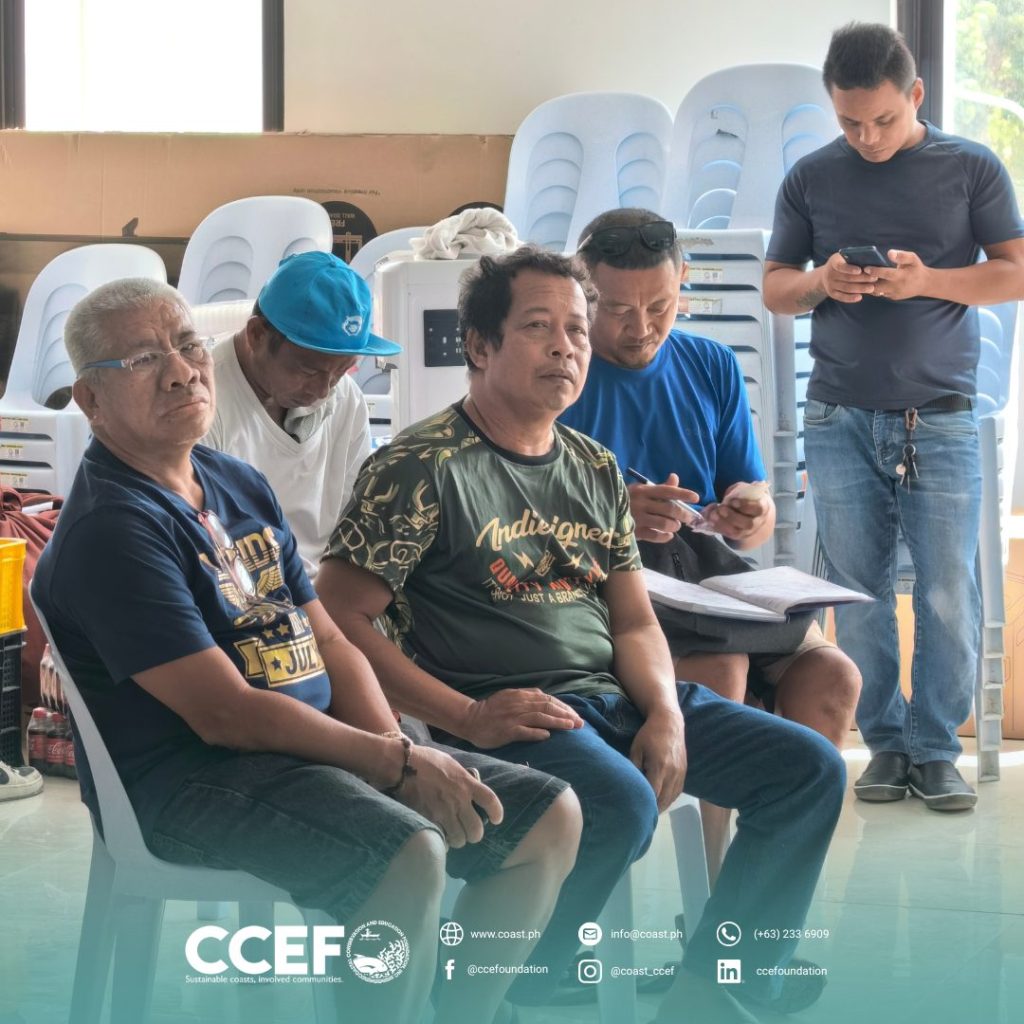
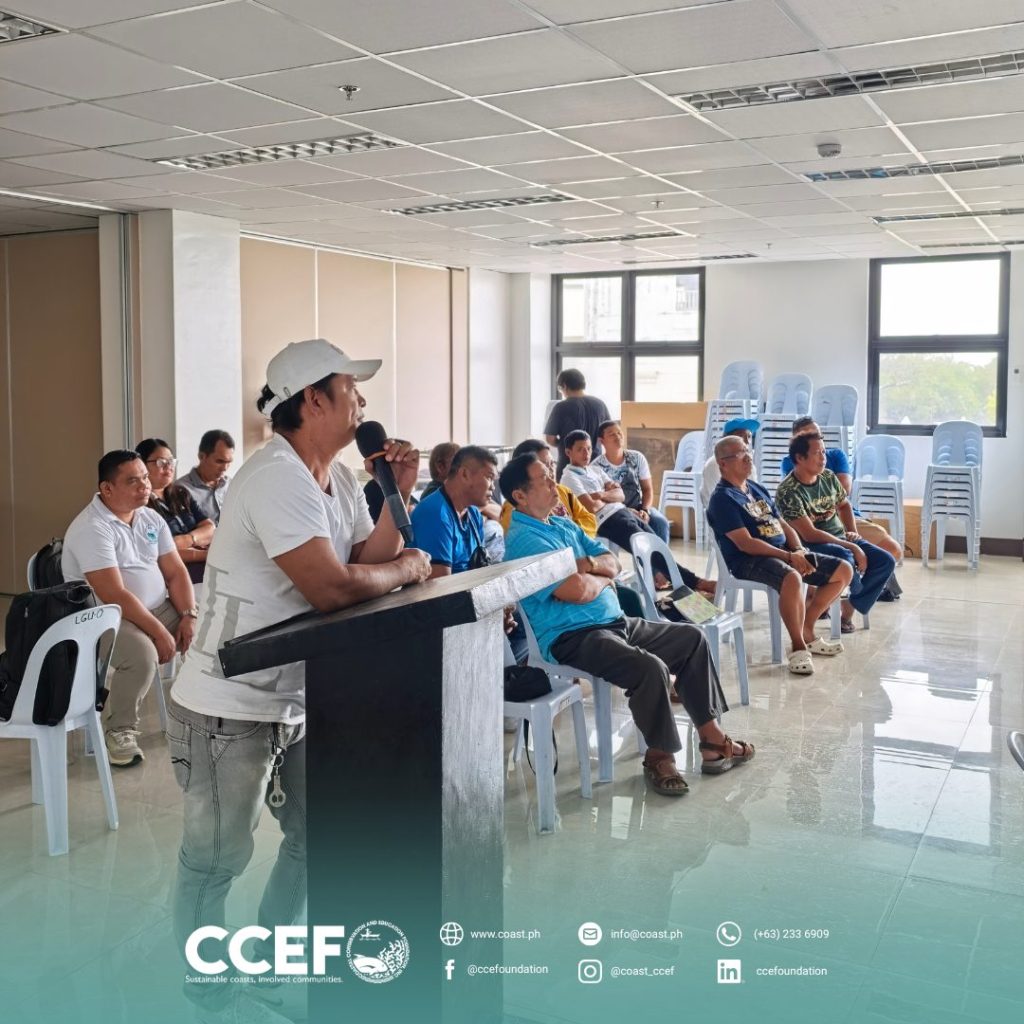
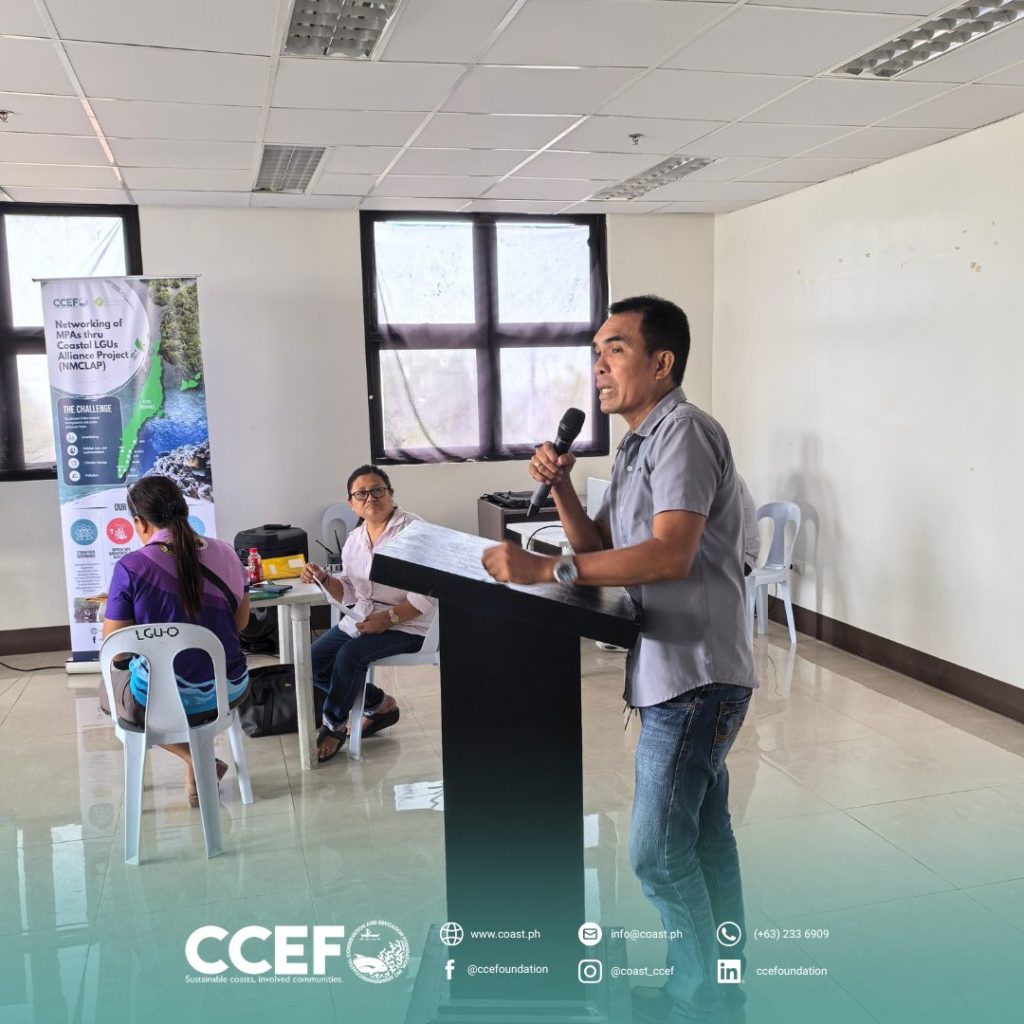
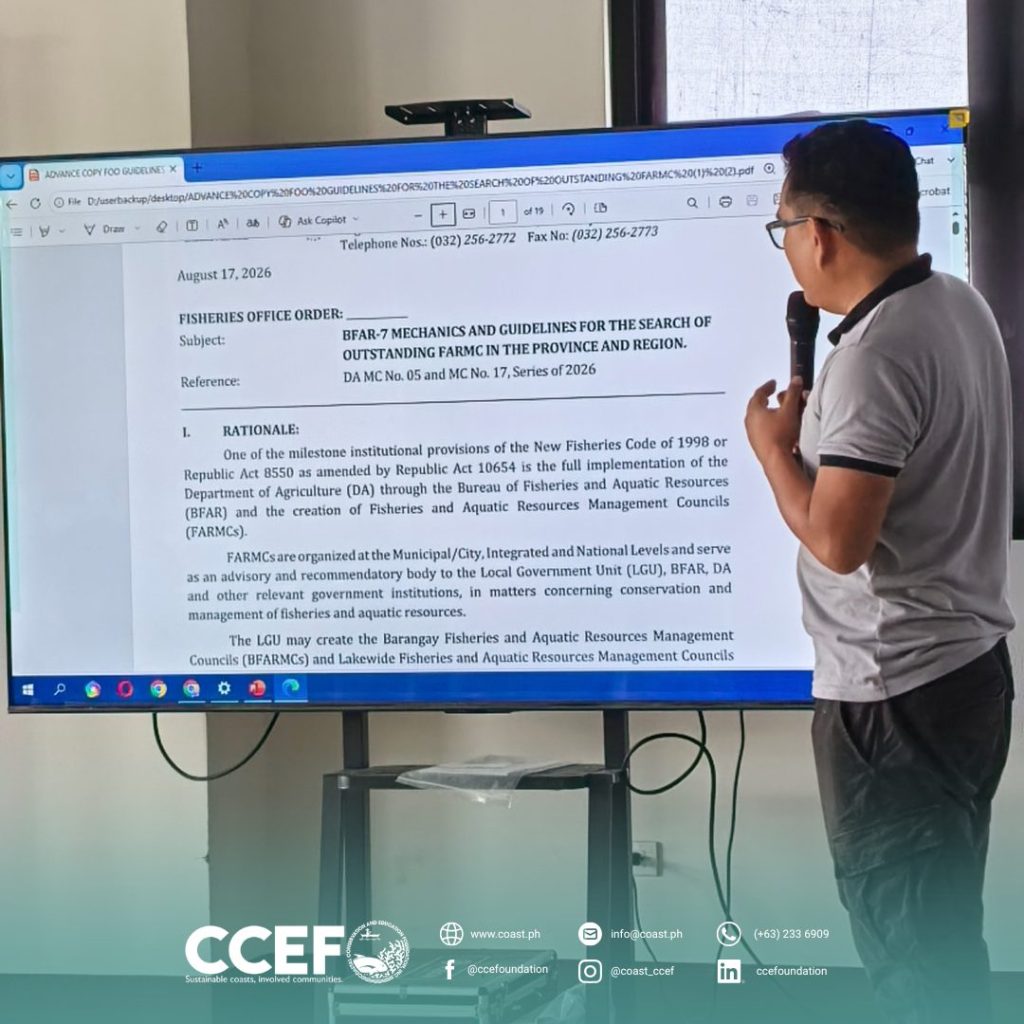
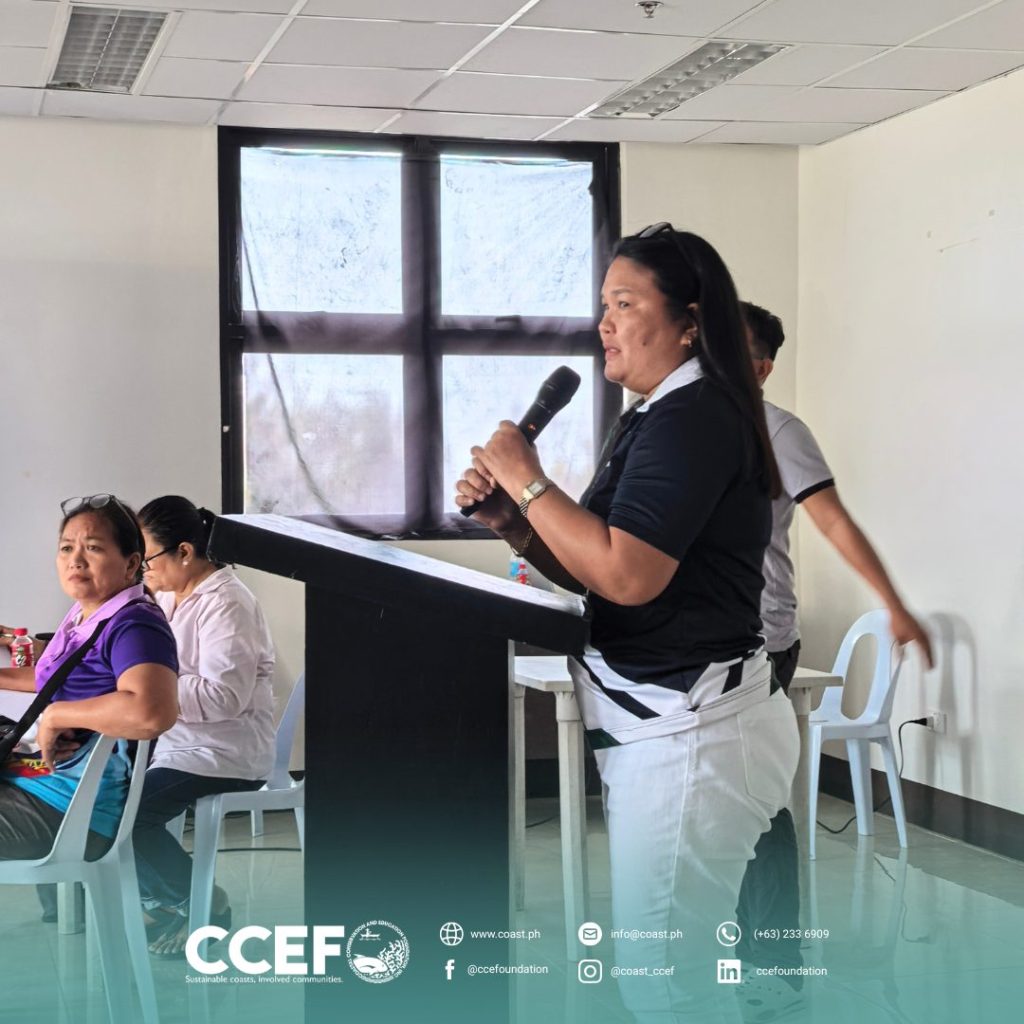
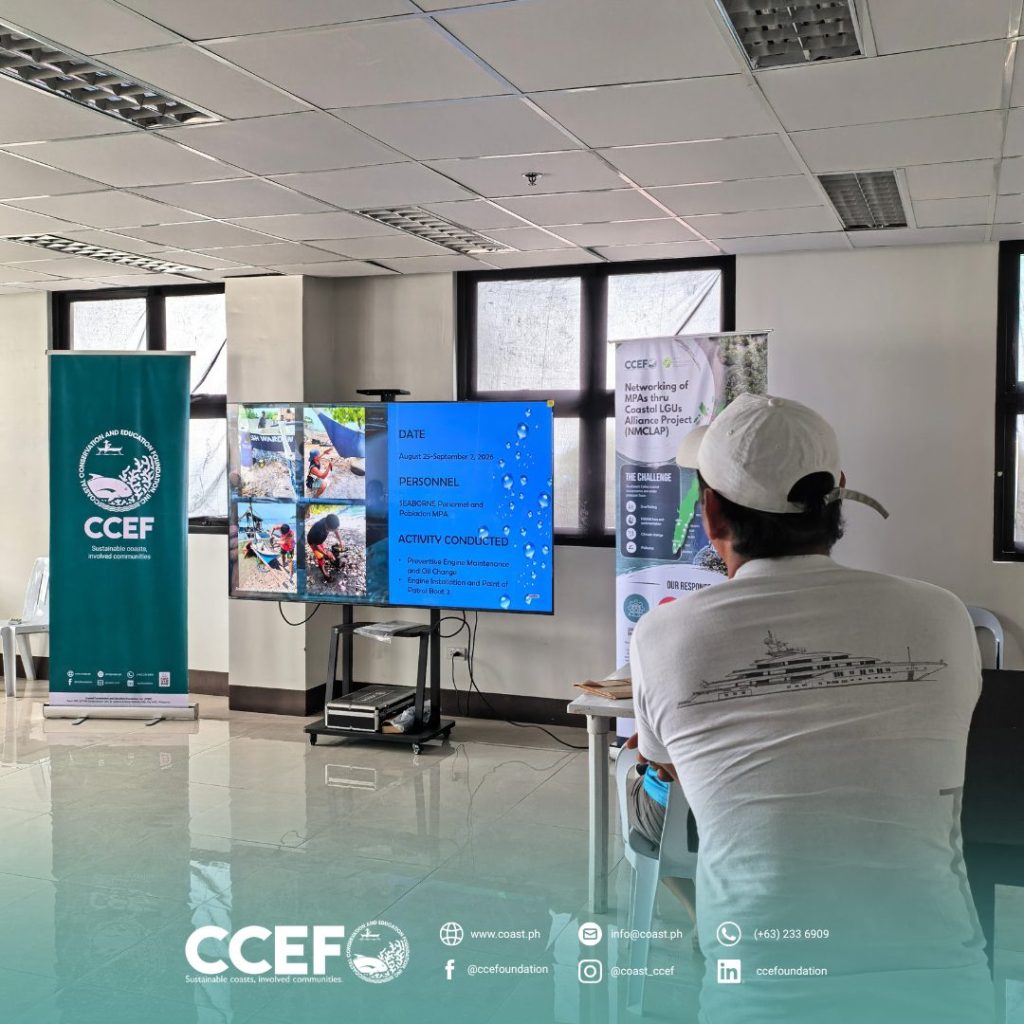
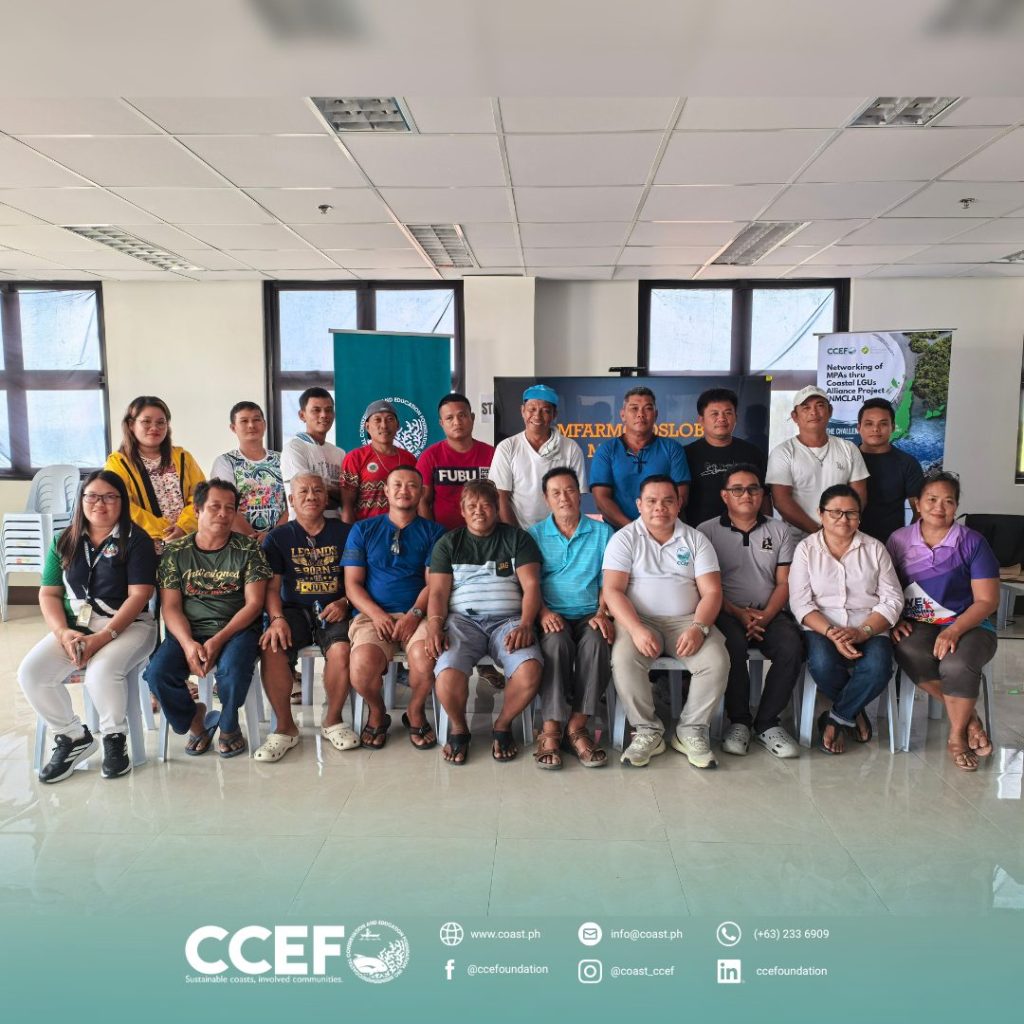
The Coastal Conservation and Education Foundation (CCEF) attended the third quarter meeting of the Municipal Fisheries and Aquatic Resources Management Council (MFARMC)-Oslob. CCEF sits on as the LGU’s partner organization and is working under the Networking of MPAs thru Coastal LGUs Alliance Project (NMCLAP), funded by the Unico Conservation Foundation, to establish three Marine Protected Areas (MPAs) in Barangays Hagdan, Mainit, and Bonbon. The main item for CCEF was the council’s preparation of a resolution endorsing the establishment and management of the three MPAs to the Sangguniang Bayan.
What the Endorsement Signals
- Institutional legitimacy. The MFARMC is the municipal body through which fisherfolk, local government, and other stakeholders deliberate on fisheries management. An MPA proposal that comes from the council carries the standing of a sector-wide recommendation, not only that of the proponent organization.
- A shift in scale. The proposal moves from barangay-level agreements to municipal policy, which is where boundaries, penalties, and funding can be given the force of law.
- A clear pathway to enactment. The resolution places the three MPAs before the Sangguniang Bayan, alongside the draft ordinances prepared with the communities. The decision now rests with the legislative body, with the supporting evidence and consultation record already in place.
- Alignment of the fisheries sector. The council is chaired by Ma’am Ana S. Luna, who is also President of the Bonbon Oslob Fishermen Association (BOFA). This keeps the fisherfolk’s voice at the center of the deliberation and gives the endorsement credibility with the people who will live under the rules.
CCEF’s role in the council is to bring the technical and community record into that deliberation: the assessment data, the zoning agreed with residents, and the draft governance and financing framework. That record is what turns a proposal into an endorsement the Sangguniang Bayan can act on.


Other Items on the Agenda
The council heard the Bantay Dagat’s third quarter accomplishment report on patrols and the enforcement of fisheries laws and ordinances. Enforcement capacity is a key determinant of whether an MPA delivers results, so this report is directly relevant to the areas being proposed. The council also reviewed the progress of fisheries sector programs, particularly those on livelihoods and the conservation of marine resources.
The Groundwork Behind It
The endorsement rests on CCEF’s work completed in recent weeks. Barangay assemblies on July 25–26 and August 29 secured community consent for no-take core zones totaling about 53.4 of the 87.85 hectares proposed. Ordinance workshops on August 7 (Hagdan and Mainit) and September 3 (Bonbon) produced draft instruments on zoning, prohibited acts, penalties, user fees, and community-led management, anchored in the Fisheries Code (RA 8550, as amended) and the Local Government Code (RA 7160).
Next Steps
The Sangguniang Bayan will consider the MFARMC’s endorsement together with the MPA ordinances now being formulated. CCEF will continue to support the Oslob LGU, the barangays, and the fishing communities through enactment, implementation, and long-term monitoring.
Why Protect: What the Communities Told Us
Across the assemblies and workshops in Hagdan, Mainit, and Bonbon, fisherfolk and barangay leaders explained why they support the sanctuaries. The case for an MPA is clearest in their own experience.
Fishing is getting harder. Fishers described having to travel much farther for a small catch, where one cast of the net used to be enough. Fisheries scientists call this rising effort for a declining catch, a typical sign of depleted stocks. An MPA addresses it at the source by protecting the fish population itself, rather than only regulating how much is taken from it.
Fish need a place to reproduce. Community members understood that a no-take zone gives fish a safe place to spawn and grow. They also understood that fish are not fenced in. As stocks rebuild, adults and larvae move beyond the boundary, so the benefit reaches surrounding fishing grounds.
Resources must be replenished, not only extracted. Several Bonbon leaders put it plainly: if the sea is not allowed to refill, fishing will eventually exhaust it. Protecting a portion of the reef is how a community invests in the fishery it will depend on tomorrow.
The sea is a legacy. The communities spoke repeatedly about their children and grandchildren, and about leaving them fishing grounds and perhaps a tourism attraction as well. This is the principle of intergenerational equity, applied to a reef.
Rules give people confidence. Fisherfolk said that an ordinance grounded in national law gives them assurance, and the confidence to lead and manage the MPA themselves. Legal backing turns a community’s good intentions into a framework that holds.
For Oslob, the three proposed MPAs offer a way to keep the reefs productive, the fishery viable, and the management in the hands of those who depend on it. The Sangguniang Bayan’s decision is the next step, and the communities have already shown why it matters.